
In a quiet research lab, two engineers debated fiercely, one advocating for Mistral and the other for Llama 3. “Mistral’s efficiency is unmatched,” one argued, but “Llama 3 versatility gives it the edge,” the other countered.
This is the debate we have heard a number of times, where people favor and promote their favorite model.
At the core of it all, we know that both models are efficient and helpful. Mistral is designed for speed and adaptability, excelling in lightweight deployments where efficiency matters. On the other hand, Llama 3, developed by Meta, pushed the boundaries of deep learning, making it perfect for complex reasoning and large-scale applications.
So, when it comes to Mistral vs Llama 3, the choice depends on whether you seek agility or raw power. But one thing remains certain: the AI race is far from over. Let’s understand each model in depth and how they impact the AI services and future landscape.
Overview of Mistral
Mistral is an advanced AI model designed for better efficiency and adaptability. Unlike major AI systems, which demand extensive computational resources, Mistral focuses on lightweight, high-performance models that deliver exceptional results with minimal overhead. It is optimized for real-time apps, excelling in areas like conversational AI, text generation, and automation.
One major standout feature of Mistrals is its open-weight architecture, which allows developers great flexibility in fine-tuning and customizations. Mistrals strike a balance between power and accessibility, making AI more scalable for different use cases.
When comparing Llama 3 vs Mistral, the latter shines in efficiency and agility, catering to environments where resource constraints exist. Mistral continues to push the boundaries of smart and efficient AI solutions as AI changes.
But don’t get so impressed with only one model; it is better to take a look at both.
Overview of Llama 3
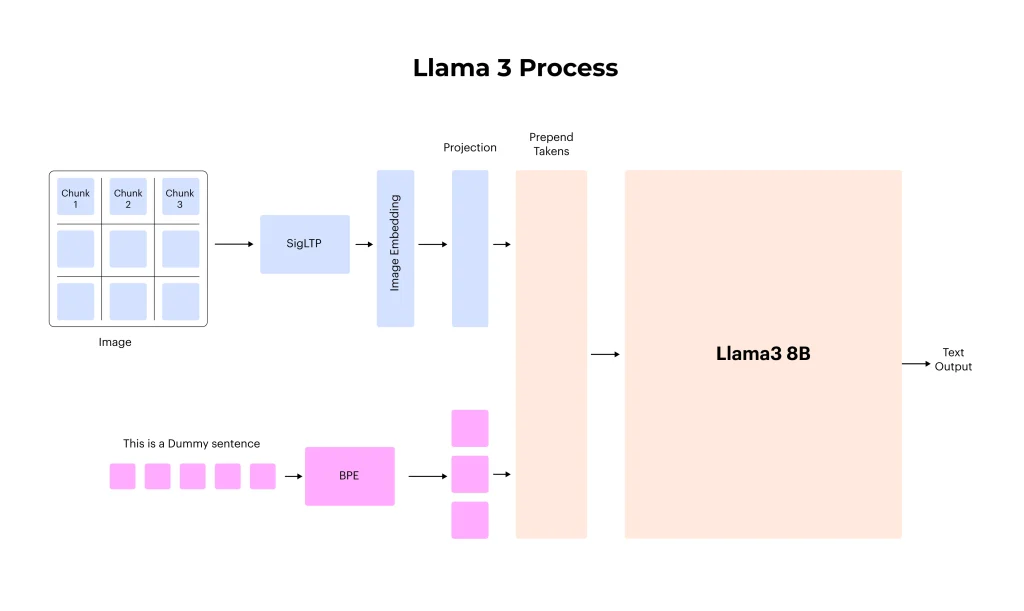
Llama 3, developed by Meta, is a state-of-the-art AI model designed for advanced reasoning, deep learning, and large-scale applications. As an evolution of its predecessors, Llama 3 boasts better efficiency, better contextual understanding, and enhanced NLP capabilities. It is optimized for generating human-like text and code and complex problem-solving.
With its high parameter count, Llama 3 excels in tasks requiring extensive knowledge processing and comprehension. Its strong architecture makes it ideal for enterprises, research, and AI-powered applications.
In the debate of Mistral vs Llama 3, Llama 3 dominates in raw power and scalability, while Mistral focuses on agility and efficiency. Choosing between these models depends on your prioritization of computational strength and streamlined performance.
While both models redefine AI innovation, their strengths lie in different areas. Let’s examine the key differences between Mistral and Llama 3 to understand which one best suits your needs.
Key Differences Between Mistral and Llama 3
Choosing between Mistral and Llama 3 comes down to their core strengths. One prioritizes efficiency, while the other focuses on scale and power. In the Llama 3 vs Mistral debate, understanding its key differences will help determine which model best fits your AI needs.
First, here we have a quick tabular comparison for easy understanding.
Feature | Mistral | Llama 3 |
|---|---|---|
Developer | Mistral AI | Meta |
Focus Area | Speed, efficiency, and adaptability | Large-scale reasoning and deep learning |
Model Size | Compact, lightweight models | Large parameter models |
Performance | Optimized for real-time applications | Excels in complex problem-solving |
Use Cases | Conversational AI, automation, lightweight AI solutions | Research, enterprise applications, AI-powered tools |
Scalability | Highly adaptable, suitable for constrained environments | Requires more computational power but handles large-scale applications |
Open-Source | Yes, open-weight architecture | Partially open-source, controlled access |
Best For | Developers needing agile, efficient AI | Organizations requiring high computational AI solutions |
Now that we’ve seen a high-level comparison let’s break down the other essential distinctions in detail. We’ll explore both models’ architecture, performance, and more to understand how each model stands out.
Model Architecture
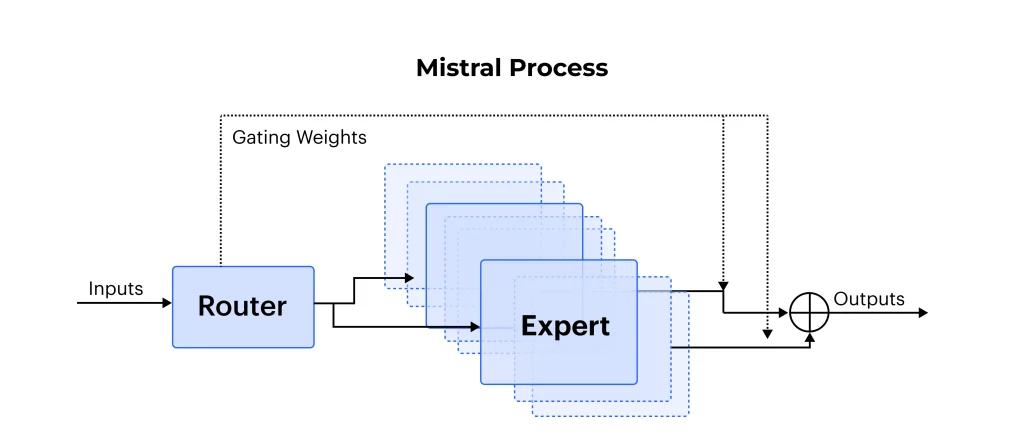
Mistral models mainly focus on dense transformer architectures optimized for efficiency, while Llama 3 employs a mixture of experts (MoE) in some variants to enhance scalability. This architectural difference impacts their performance in different AI apps.
Performance & Benchmarking
Benchmark tests indicate that Llama 3 easily outperforms Mistral in complex reasoning and language understanding, whereas Mistral is optimized for low latency and speed inference. The choice depends on whether accuracy or efficiency is the priority.
Training Data & Multimodality
Mistral uses a different dataset but primarily focuses on text, while Llama 3 integrates multimodal capabilities, supporting text and image-based reasoning. This gives Llama 3 an edge in vision language applications.
Context Length & Memory Efficiency
Mistral is designed for higher memory efficiency, making it perfectly suitable for resource-constrained environments. Llama 3, however, offers a longer context window, making it extra effective for processing extensive documents and long-form conversations.
Open-Source Community & Ecosystem
Both models have strong open-source support, but Mistral is getting traction for its lightweight yet powerful implementation. On the other hand, discussions on Llama 3 vs Mistral frequently highlight Meta’s strong developer ecosystem and broader industry adoption.
Each model has its strengths, and choosing between Mistral vs Llama 3 depends on specific use cases, whether you are prioritizing efficiency, scalability, or multimodal capabilities.
Mistral vs Llama 3: Use Cases, Applications & Choosing the Right Model
Both open-source language models have excelled in different areas, depending on the use case, performance needs, and deployment environments. Let’s explore where and when each model shines.
Mistral: Use Cases & Applications
“Optimized for speed, scalability, and low resource environments.”
Mistral is a compact, highly efficient model designed for real-world deployments where speed and low overhead matter. It balances performance and size, making it a better choice for on-device or lightweight server apps.
Key Applications:
Real-time assistants with low latency
Mobile and edge AI solutions with a limited sum
Customer service bots providing fast and context-light replies
Scalable API-based services where cost-efficiency is necessary
Chat integrations for quick, consistent user interaction
The smaller architecture gives faster inference, better throughput, and energy-efficient performance, which is perfect for startups and embedded system use cases.
When to Choose Mistral?
Best for lightweight, performance-driven environments.
Opt for Mistral if:
You need to deploy models on limited infrastructure
Inference speed and response time are critical
Your AI usage is cost-sensitive or has to scale across users
For building applications like bots, microservices, or IoT solutions
When you need to prioritize control and customization with minimal resources
Llama 3: Use Cases & Applications
“Built for super complex reasoning, creative generation, and contextual understanding.”
Llama 3 is a powerful foundation model designed to handle complex prompts, deep contextual understanding, and longer interactions. The model is well-suited for apps that need nuanced and high-quality output.
Key Applications:
Content generation like blogs, emails, scripts, etc
Code writing and debugging tools
AI research agents for academic or data-heavy tasks
Enterprise-grade copilots and knowledge workers
Instruction-tuned chat systems for advanced interactions
It is a large model sizing from 8B to 70B, allowing for rich semantic comprehension and broader generalization capabilities on different tasks.
When to Choose Llama 3?
Ideal for depth, scale, and complex AI workflows.
Choose Llama 3 when:
You require rich, context-aware responses
Applications involve multi-turn conversations
For building tools in professional or enterprise settings
Accurate for the project focuses on accuracy, coherence, and generation quality
Give a foundation for LLM fine-tuning and training
In the battle of Mistral vs Llama 3, the decision comes down to priorities. Mistral is ideal for speed, cost, and light deployment. Meanwhile, with Llama 3, go for advanced reasoning and content depth. Whether it’s Llama 3 vs Mistral, always align your model with your application’s needs.
Conclusion: Mistral vs Llama 3 – Choosing the Right AI Model
In the ongoing Llama 3 vs Mistral debate, the decision eventually depends on your specific AI needs. Mistral is the go-to model for speed, efficiency, and lightweight deployments, making it ideal for real-time applications, chatbots, and low-resource environments.
On the other hand, Llama 3 stands out for its deep reasoning, large-scale processing, and high-quality content generation, making it perfect for enterprises, research, and complex AI-driven applications.
At Openxcell, we specialize in custom AI development, model selection, and easy AI integration to help businesses unlock the full potential of artificial intelligence. Whether you’re looking to deploy an efficient AI assistant with Mistral or build a powerful AI-driven platform with Llama 3, our experts can guide you through the process. Our cutting-edge AI solutions, fine-tuning expertise, and deployment strategies assure you that your business will stay ahead in the AI revolution.