Large Language Models Examples: Top Models, Applications & Insights
 Last updated:December 19, 2025
 11 Min Read
- What Exactly Is a Large Language Model?
- Why Large Language Models Matter
- 25+ Large Language Models Examples
- 1. OpenAI GPT-4o & GPT-4.1
- 2. Anthropic Claude 3 (Opus, Sonnet, Haiku)
- 3. Meta Llama 3 / Llama 3.1
- 4. Google Gemini 1.5 / 2.0
- 5. Mistral Large
- 6. xAI Grok 2
- 7. DeepSeek V3 / DeepSeek-R1
- 8. Cohere Command R+
- 9. IBM Granite
- 10. AWS Titan Text
- Use-Case Examples of LLMs
- 1. Conversational AI & Chatbots
- 2. Coding Assistants & DevOps
- 3. Search & RAG Systems
- 4. Enterprise Automation
- 5. Healthcare
- 6. Finance
- 7. E-commerce & Retail
- Comparison Table: Top Large Language Models
- How to Read This Comparison
- How to Choose the Right LLM for Your Needs
- How Enterprises Use LLMs Today
- The Future Landscape of LLMs
- Closing the Loop: The Power of Large Language Models
- Frequently Asked Questions (FAQs)


What’s inside this guide?
- A curated list of 25+ large language models examples, highlighting the most advanced and widely used LLMs.
- Clear breakdowns of each model’s strengths, capabilities, context limits, and best-fit enterprise scenarios.
- Real-world use cases across chatbots, coding, RAG search, automation, healthcare, finance, and retail.
- A quick decision guide on selecting the right LLM based on budget, governance, deployment style, and multimodality.
- A look at future trends, including agentic AI, multi-agent workflows, and reasoning-driven models.
In 2026, many global retail brands launched an AI assistant that could analyze their customers’ moods, rewrite product descriptions, predict demand, and also guide shoppers in real time, and all this is not done by a team of data scientists but by a single language model. This is the new normal in business.
With over 70% of enterprises adopting generative AI, and LLM usage growing 4x since 2023, the shift from traditional software to intelligent, language-driven systems is accelerating faster than ever.
In this blog, we will dive into the most impactful LLM examples that are shaping business, innovation, and everyday tools in 2026. You will explore 25+ leading models, their strengths, real-world use cases, comparison tables, selection criteria, and the trends defining the next era of AI.
Let’s break down what truly matters in today’s rapidly evolving LLM landscape.
What Exactly Is a Large Language Model?
A Large Language Model is an advanced type of AI trained to understand, generate, and respond in human language with accuracy. It learns from a massive amount of data, like texts, books, articles, conversations, code, and more, to recognize patterns and predict the next word or action.
This is why LLM models can write emails, answer questions, summarize content, translate languages, and also generate ideas. If you have seen large language models examples like GPT, Claude, or Llama, you have already witnessed how naturally they can simulate human-like communication.
Behind the scenes, LLM development mainly involves training deep neural networks with billions of parameters, allowing these models to reason, analyze, and adapt to different tasks. Today, they power chatbots, search engines, coding tools, business automation, and countless enterprise apps, making them one of the most transformative technologies of our time.
Why Large Language Models Matter
Large Language Models are changing how we interact with technology by making machines understand and generate human-like language and conversation. They matter because they enable automation of tasks that previously required human intelligence, like answering questions, summarizing documents, generating content, and coding.
With the rise of examples of large language models like GPT-4, Claude 3, and Llama 3, businesses and individuals can use AI to save time, improve accuracy, and enhance decision-making across multiple domains.
LLMs also open doors to innovation by powering tools for industries like healthcare, finance, ecommerce, and education. These models can easily analyze vast amounts of data, provide insights, and personalize experiences in ways traditional software cannot.
Exploring LLM examples helps organizations understand which models fit their unique needs, making AI adoption practical, scalable, and impactful.
25+ Large Language Models Examples
As generative AI matures, the LLM ecosystem also becomes broader, more specialized, and enterprise-ready. Below here is a curated overview of the most influential models shaping real-world applications today, highlighting why these large language models examples stand out across industries.
1. OpenAI GPT-4o & GPT-4.1
Key strengths: It has advanced reasoning, multimodal understanding, and high accuracy.
Example applications: Major examples of OpenAI GPT are conversational AI, coding assistants, content generation, and analytics.
Latest features: Real-time voice, image, and text processing with faster response times
2. Anthropic Claude 3 (Opus, Sonnet, Haiku)
Strengths: The strong reasoning and human-aligned responses.
Context window: Among the largest available, ideal for long documents.
Safety innovations: It is a constitutional AI for safer, and has more controllable outputs.
3. Meta Llama 3 / Llama 3.1
Enterprise value: Cost-efficient scaling for production workloads.
Example implementations: Some notable examples include internal copilots, private chatbots, and RAG pipelines.
4. Google Gemini 1.5 / 2.0
Multimodal capabilities: Gemini handles text, images, audio, and video output amazingly.
Integration ecosystem: It is deeply connected with Google Cloud and Workspace tools.
5. Mistral Large
European leader: Mistral places a strong focus on performance and transparency.
Open-weight excellence: It has high efficiency with lower computational requirements.
6. xAI Grok 2
Real-time data: xAI gives access to live information streams.
Developer ecosystem: Optimized for fast experimentation and real-time apps.
7. DeepSeek V3 / DeepSeek-R1
Cost-efficient: Provides competitive performance at reduced inference costs.
High performance in reasoning: Strong results in math and logic-heavy tasks.
8. Cohere Command R+
Business-focused LLM: Cohere Command R+ is built particularly for enterprise workflows.
Enterprise search + RAG: Works excellently for knowledge retrieval and internal data use.
9. IBM Granite
Responsible AI: IBM’s emphasis on transparency and compliance.
Enterprise-grade governance: It is ideal for regulated industries.
10. AWS Titan Text
Cloud-native: Designed for scalable cloud deployments.
Integration with the AWS ecosystem: Easily used with Bedrock and other AWS services.
Together, these examples of LLM highlight how organizations combine innovation with governance, often supported by expert AI development services to build scalable, secure, and future-ready AI solutions.
Use-Case Examples of LLMs
Large language models are no longer experimental tools; they are now embedded into everyday products and enterprise systems. It helps improve customer interactions and automate complex workflows; these large language model examples demonstrate how AI-driven language understanding delivers real business value across industries.
1. Conversational AI & Chatbots
The big and well-known models like ChatGPT, Claude, and Llama power intelligent chatbots that handle customer support, onboarding, internal help desks, etc. They understand context, respond naturally, and continuously improve user experiences across different channels.
2. Coding Assistants & DevOps
GitHub, Copilot, and Code Llama help developers write, review, and debug code faster. These tools enhance productivity, minimize errors, and support DevOps teams with automated scripting, testing, and deployment guidance.
3. Search & RAG Systems
Gemini, Cohere, and Llama enable advanced search and RAG systems. It retrieves accurate information from enterprise data and generates contextual answers, making the knowledge discovery faster and more reliable.
4. Enterprise Automation
LLMs greatly streamline document processing by extracting insights from contracts, invoices, and reports. They also automate workflows, giving faster approvals, smarter routing, and reducing manual effort.
5. Healthcare
In the healthcare sector, GPT and Claude support clinicians by summarizing medical records, assisting in documentation, and providing clinical insights, while maintaining compliance and accuracy.
6. Finance
LLMs power automated financial analysis, reporting, and fraud detection. It also supports risk modelling by analyzing market trends and large datasets efficiently.
7. E-commerce & Retail
Personal recommendation engines use examples of large language models to analyze user behavior, personalize product suggestions, and enhance customer engagement at scale.
AI-Based Recruitment Software
An enterprise recruitment platform that uses Large Language Models to automate resume screening, candidate matching, and interview shortlisting. By utilizing AI-driven language understanding, the solution greatly reduces hiring time, improves candidate quality, reduces manual biases, and helps recruiters make faster, data-driven decisions at scale.
Comparison Table: Top Large Language Models
As there are so many LLMs available in 2026, choosing the right one depends on factors like performance, context length, deployment flexibility, and cost. The comparison below provides a quick, side-by-side view of the most widely adopted models, helping to understand where each excels.
| Model | Type | Best For | Max Context | Strengths |
| GPT-4o | Proprietary | Reasoning, applications | 128k | Accuracy, multimodal |
| Claude 3 Opus | Proprietary | Safety, long context | 200k | Ethical AI |
| Llama 3 | Open-source | Enterprise + deployment | 128k | Cost-effective |
| Gemini 1.5 | Proprietary | Multimodal + Google ecosystem | 1M | Ultra long context |
| Mixtral | Open-weight | Low-cost deployment | 64k | Efficiency |
| Grok 2 | Proprietary | Real-time queries | 128k | Live data |
| DeepSeek V3 | Open-weight | Cost + speed | Large | Best cost-performance |
How to Read This Comparison
- Model Type shows whether the LLM is proprietary, open-source, or open-weight, impacting customization and control.
- Best For highlights ideal use cases such as reasoning, enterprise deployment, or real-time data access.
- Max Context indicates how much information the model can process simultaneously, which is crucial for long documents and RAG systems.
- Strengths summarize what sets each model apart—accuracy, efficiency, safety, or a balance of cost and performance.
This table helps quickly align business needs with the most suitable LLM option.
Additional Read: Top LLM Companies to Partner with in 2026
How to Choose the Right LLM for Your Needs
When it comes to choosing the right Large language model, it is a strategic decision that will affect performance, scalability, and long-term ROI. As there are so many options available in 2026, businesses must evaluate LLMs beyond popularity and focus on how well they will align with their real-world requirements.
Here are the points below outlining the key factors to consider while choosing from various examples of large language models.
- Budget
All the LLMs vary in pricing, from usage-based proprietary APIs to cost-efficient open weight models. Consider not only licensing or API costs but also look for infrastructure, fine-tuning, and ongoing inference expenses. A lower upfront cost might lead to a higher operational spending at scale.
- On-Premise vs Cloud
The cloud-based LLMs give fast deployment and scalability, making them perfect for startups and fast-growing teams. Where on-premises or private deployments provide great control. Customization and data privacy are mainly preferred by large enterprises and regulated industries.
- Data Governance
If your company handles sensitive or regulated data, governance becomes essential. It is advisable to seek LLMs that support data isolation, auditability, compliance, and clear data usage policies to meet legal and ethical standards.
- Multimodality
Some LLMs go beyond text, supporting images, audio, and videos. If your use cases involve strong media inputs, like visual analysis or voice interactions, multimodal capabilities are essential.
- Deployment Needs
Evaluate how easily the LLM integrates with your existing systems, tools, and workflows. Consider latency, scalability, customization options, and whether the model supports fine-tuning or prompt optimization.
- RAG Integration
For enterprise knowledge use cases, RAG integration is crucial. Choose models that work well with vector databases and search pipelines to deliver accurate, context-aware responses from proprietary data.
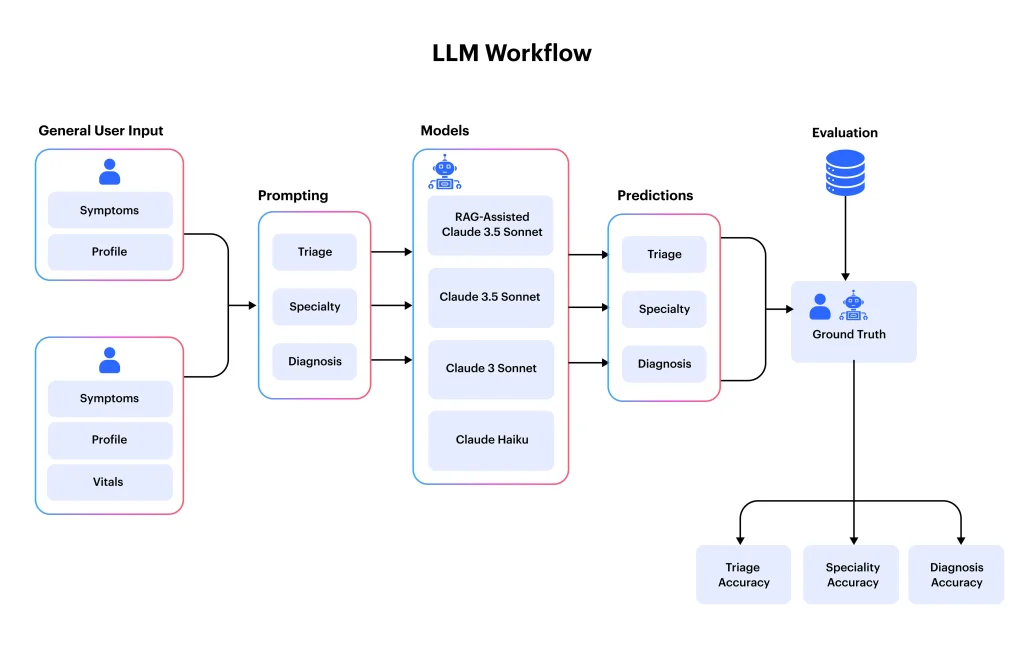
One of the amazing examples of LLM-powered apps is our smart healthcare app, which uses LLM-powered insights to analyze patient data, assist with symptom interpretation, and give personalized guidance. This solution has improved clinical decision support, enhanced user engagement, and demonstrated how the right LLM choice can drive meaningful outcomes.
How Enterprises Use LLMs Today
Enterprises are moving at a rapid speed from experimentation to full-scale deployment of large language models. In 2026, LLMs are immersed in core business systems, helping organizations to automate processes, improve decision-making, and deliver personalized experiences at scale.
These large language model examples showcase how AI is creating a measurable impact across all industries.
Real-World Case Studies
Businesses use LLMs to build intelligent assistants, automate document-heavy workflows, and strengthen customer support. There are many case studies that have shown reduced operational costs, faster response times, and improved accuracy by integrating LLMs into everyday business operations.
Industry Breakdown
In the healthcare sector, LLM assists with clinical documentation and patient engagement. Financial institutions use them for risk assessment and regulatory reporting. Retail and eCommerce businesses use LLMs for personalized recommendations, while logistics and manufacturing adopt them for forecasting and operational insights.
Transformation Impact
LLMs enable organizations to scale intelligence across different teams by turning unstructured data into actionable insights. The advances, like LLM tokenization, allow the models to process vast volumes of information efficiently, improving context understanding and response quality.
As a result, enterprises experience faster innovation cycles, higher productivity, and have a more adaptive digital ecosystem driven by AI.
The Future Landscape of LLMs
The future of large language models is defined by rapid innovation and the company’s maturity. Emerging LLM benchmarks are moving focus from simple text generation to deeper reasoning, accuracy, and real-world task completion. The models are becoming efficient, context-aware, and align with business goals, enabling smarter decision-making across different industries.
A major trend in agentic AI is where LLMs act autonomously to plan, execute, and optimize tasks. It is also further enhanced by multi-agent workflows, allowing many AI agents to collaborate, delegate responsibilities, and solve complex problems together. At the same time, hyper-personalization is changing user experiences by delivering highly tailored content, recommendations, and interactions in real time.
Finally, focused models are getting traction, prioritizing logic, memory, and problem-solving over raw generation, setting a new standard for practical LLM examples in 2026 and beyond.
Closing the Loop: The Power of Large Language Models
In 2026, large language models are backing up the new innovation in all different sectors, from chatbots and coding assistants to RAG systems, healthcare, finance, retail, and more. By examining examples of large language models and their applications, strengths, and future trends, this guide illustrates how LLMs are transforming workflows, improving efficiency, and facilitating smarter, data-driven decisions.
Understanding and adopting these models is important for organizations aiming to stay competitive in an AI-powered world.
At Openxcell, we empower businesses to use the full potential of LLMs and generative AI. Our services include custom LLM development, AI agent systems, Gen AI solutions, and more, to help organizations build scalable, secure, and intelligent solutions that drive measurable results and innovation.
Frequently Asked Questions (FAQs)
1. What are Large Language Models (LLMs)?
LLMs are advanced AI models constantly trained to understand, generate, and interact using human language, powering apps like chatbots, coding assistants, and document analysis.
2. Can you give some popular large language models examples?
Some of the most popular models include GPT-4o, Claude 3, Llama 3, Gemini 1.5, and Grok 2. Each model is designed for different business and technical applications.
3. How do enterprises use LLM examples in real-world applications?
Enterprises deploy LLMs for automation, search, and RAG systems, for personalized recommendations, and healthcare or financial analytics.
4. What factors should I consider when choosing examples of large language models for my business?
The factors that one needs to consider are context window, deployment options, multimodality, cost, and alignment with your specific industry needs.
5. Are there open-source large language model examples available?
Yes, the models like Llama 3 and Mixtral give open source options, allowing businesses to customize, deploy, and scale LLM solutions effectively.

Manushi, a former literature student, now crafts content as a writer. Her style merges simple yet profound ideas. Intrigued by literature and technology, she strives to produce content that captivates and stimulates.