Claude Haiku vs Sonnet: How to Choose the Right AI Model
 Last updated:January 27, 2026
 10 Min Read
- Understanding the Claude Model Lineup
- Claude Haiku: Speed-First AI Built for Scalable Performance
- What Is Claude Haiku?
- Key Characteristics of Claude Haiku
- Where Claude Haiku Excels
- Claude Sonnet: Balanced AI for Advanced Reasoning and Quality Outputs
- What Is a Claude Sonnet?
- Key Characteristics of Claude Sonnet
- Where Claude Sonnet Excels
- Haiku vs Sonnet: Feature-by-Feature Comparison
- Reasoning and Intelligence Capabilities
- Performance Metrics: Speed, Latency, and Scalability
- Cost Efficiency and ROI: Evaluating Value in AI Deployment
- Use Case Breakdown: Which Model Fits Where?
- Choose Claude Haiku If You Need:
- Choose Claude Sonnet If You Need:
- Haiku vs Sonnet in Enterprise AI Systems
- 1. RAG (Retrieval-Augmented Generation) Applications
- 2. Integration with Custom LLM Workflows
- Decision Framework: Haiku or Sonnet?
- Conclusion: Choosing the Right Claude Model for Smarter AI Outcomes
- FAQs: Haiku vs Sonnet Claude Models


Core Insights
- Claude Haiku is optimized for speed, low latency, and cost efficiency.
- Claude Sonnet delivers stronger reasoning, deeper context handling, and higher accuracy.
- Haiku works best for real-time, high-volume, and transactional workloads.
- Sonnet is better suited for complex analysis, content creation, and enterprise use cases.
- When evaluating Claude Haiku vs Sonnet, the choice depends on whether performance or intelligence is the priority.
- Many organizations deploy both models together for optimal results.
AI models are no longer built to do everything at once. Instead, they are useful for crafting with intent; some are designed for speed, others for depth, and a few for a perfect balance in between. As artificial intelligence becomes deeply embedded in everyday digital products, choosing the right model has become less about novelty and more about precision, performance, and purpose.
This is where the comparison between Claude Sonnet vs Haiku becomes especially relevant. As both models belong to Anthropic’s Claude family, they are optimized for different workloads, ranging from real-time automation to complex reasoning tasks. It is important to differentiate to build scalable products, especially for those working at an AI development service that deploys production-ready AI solutions.
Understanding the Claude Model Lineup
Anthropic’s Claude models are created with a clear purpose: to give different levels of speed, intelligence, and reasoning based on real-world application needs.
Rather than a one-size-fits-all approach, the Claude lineup allows organizations to choose the models that align with performance expectations, budget constraints, and workload complexity, making AI deployment more efficient and strategic.
- Claude Haiku is one of the most lightweight models in the lineup; it is optimized for ultra-fast responses and low operational costs. It performs exceptionally well in real-time, high-volume scenarios where quick execution matters more than deep reasoning, making the model ideal for automation-heavy experiments.
- Claude Sonnet strikes a perfect balance between speed and intelligence. It is mostly compared in discussions around Haiku vs Sonnet; it gives strong reasoning capabilities and better context handling while maintaining reliable performance for most production workloads.
- Claude Opus represents the most advanced tier, built for maximum reasoning depth, creativity, and complex problem-solving. In the evaluations of Claude Haiku vs Sonnet, Opus is mainly positioned as the enterprise-grade option for mission-critical and knowledge-intensive apps.
Claude Haiku: Speed-First AI Built for Scalable Performance
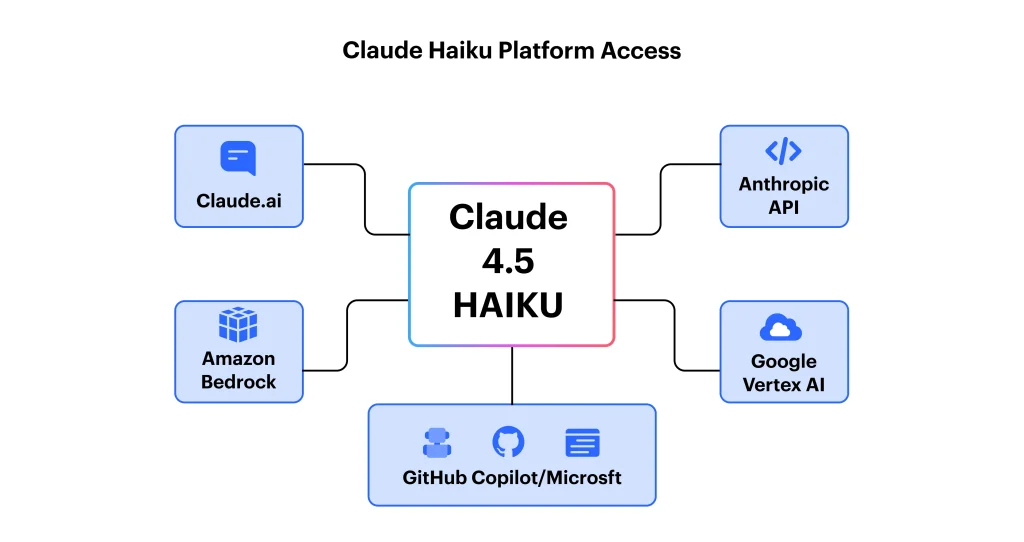
Claude Haiku is designed for environments where speed, efficiency, and scale take precedence over deep reasoning. As the lightest model in the Claude lineup, it helps organizations deploy AI capabilities across high-traffic systems without compromising responsiveness or cost control.
What Is Claude Haiku?
Claude Haiku is a fast, compact language model made by Anthropic to handle basic and straightforward tasks with minimal latency. It is optimized for rapid execution, making it ideal for real-time interactions, automated workflows, and systems that process large volumes of requests simultaneously.
Key Characteristics of Claude Haiku
- Ultra-fast response times with low latency
- Cost-efficient token usage for large-scale deployments
- Optimized for short, structured prompts
- Reliable performance in repetitive and transactional tasks
Where Claude Haiku Excels
Claude Haiku performs exceptionally well in real-time chat applications, customer support automation, data extraction, content summarization, and event-driven workflows. Its efficiency makes it a strong choice for businesses prioritizing speed, scalability, and operational efficiency over complex reasoning.
Claude Sonnet: Balanced AI for Advanced Reasoning and Quality Outputs
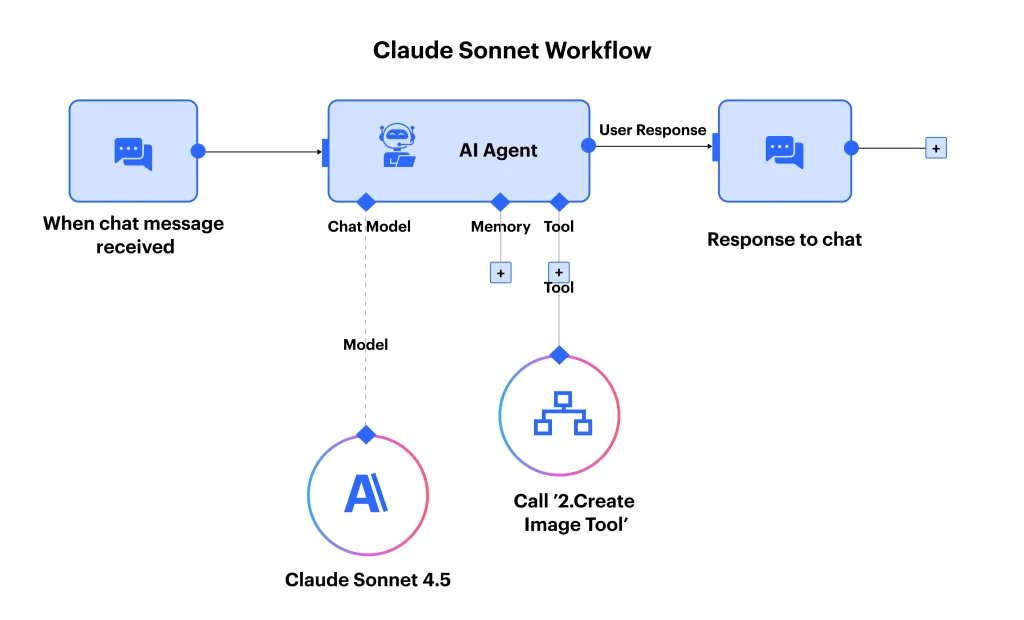
Claude Sonnet is made for scenarios where output quality, contextual understanding, and logical reasoning matter the most in performance. It is positioned between lightweight and enterprise-grade models; it delivers a reliable balance that makes it suitable for complex, production-level AI workloads.
What Is a Claude Sonnet?
Claude Sonnet is a mid-tier large language model built by Anthropic to handle multi-step reasoning, nuanced instructions, and longer contextual prompts. In this comparison of Sonnet vs Haiku, the Sonnet stands out for its ability to make more structured, accurate, and thoughtful responses without excessive latency.
Key Characteristics of Claude Sonnet
- Strong reasoning and analytical capabilities
- Improved long-context understanding
- High accuracy in instruction-following
- Consistent performance across diverse tasks
Where Claude Sonnet Excels
Claude Sonnet performs best in complex content generation, technical documentation, code analysis, research assistance, and business decision support. In the evaluations of Claude 3.5 Haiku vs Sonnet, the Sonnet is often preferred for enterprise use cases where reliability and depth are critical.
Haiku vs Sonnet: Feature-by-Feature Comparison
In the evolving world of AI-driven content generation, understanding the strengths and limitations of every model is important. Claude Haiku and Claude Sonnet are designed to serve different purposes, making them a perfect choice between them, depending on your specific workflow needs.
While Haiku excels in speed and efficiency for large-scale tasks, Sonnet focuses on deeper reasoning and handling complex contexts. The table below highlights a feature-by-feature comparison:
| Feature | Claude Haiku | Claude Sonnet |
| Response Speed | Extremely fast | Fast |
| Reasoning Depth | Basic | Advanced |
| Context Handling | Short to moderate | Long and complex |
| Cost Efficiency | Very high | Moderate |
| Output Quality | Good | Very high |
| Best Use Case | High-volume automation | Complex reasoning workflows |
Key Takeaways from the Comparison
- Speed vs Depth: Claude Haiku gives extremely fast responses suitable for repetitive tasks, while Claude Sonnet provides advanced reasoning for intricate workflows.
- Context Handling: Haiku handles short to moderate contexts efficiently; Sonnet manages long and complex interactions with higher accuracy.
- Cost and Efficiency: Haiku is highly cost-efficient, making it ideal for large-scale automation. Sonnet, though more moderate in cost, delivers superior output quality.
- Use Cases: Haiku suits high-volume content generation or RAG services, whereas Sonnet excels in detailed problem-solving and strategic tasks.
- Choosing the Right Model: Evaluating the task complexity ensures you select the appropriate tool, making Claude Sonnet vs Haiku a decision based on speed versus depth.

Reasoning and Intelligence Capabilities
While comparing Haiku vs Sonnet Claude, understanding each model’s reasoning and intelligence strengths is important for selecting the right AI model for your workflow. As both belong to the Claude family, they are optimized for different cognitive tasks and complexity levels.
Claude Haiku
- Speed-Oriented Reasoning: Handles straightforward, rule-based logic quickly, making it ideal for repetitive tasks.
- Practical Intelligence: Excels at simple decision-making and short-context problem-solving without sacrificing response time.
Claude Sonnet
- Advanced Analytical Thinking: Capable of multi-step reasoning and deeper comprehension of complex prompts.
- Contextual Awareness: Maintains coherence across long, detailed interactions, producing high-accuracy outputs for nuanced workflows.
Performance Metrics: Speed, Latency, and Scalability
In the Sonnet vs Haiku Claude debate, speed and scalability are the main elements that make a difference for deployment efficiency:
Claude Haiku
- It gives ultra-fast response times with minimum latency, perfect for real-time interactions.
- Easily handles the high-volume requests, making it perfect for automation-heavy workflows.
Claude Sonnet
- It maintains strong performance even with complex, multi-step reasoning tasks.
- Balances speed and intelligence, supporting longer contexts without any major slowdowns.
Scalability & Operational Impact
- Haiku scales efficiently for bulk operations with low cost.
- Sonnet ensures consistent output quality and reliability in enterprise-level tasks.
Cost Efficiency and ROI: Evaluating Value in AI Deployment
When assessing Claude 3.5 Sonnet vs Haiku, cost and return on investment play an important role in deciding which model fits your workflows.
The Claude Haiku is highly cost-efficient, making it perfect for high-volume automation, real-time chat, and repetitive tasks. The lightweight design minimizes resource consumption without compromising speed, giving significant savings for large-scale deployments.
On the other hand, Claude Haiku vs Sonnet highlights that Sonnet is slightly more resource-intensive, delivers high accuracy, advanced reasoning, and better context management.
For enterprise workflows that need complex decision-making or multi-step problem-solving, Sonnet gives a strong ROI through improved output quality and reliability, despite higher operational costs.
Use Case Breakdown: Which Model Fits Where?
When it comes to choosing the right AI model, it should strongly depend on workload complexity, response expectations, and business objectives. In this discussion of Haiku vs Sonnet, understanding the real-world use cases helps the teams to deploy the right model with confidence and efficiency.
Choose Claude Haiku If You Need:
Claude Haiku is the best-suited model for speed-driven, high-volume environments where fast responses matter more than deep reasoning.
- Real-time chat responses: Gives instant replies for customer-facing apps.
- Simple question answering: Handles direct queries with minimal latency.
- Bulk content generation: Efficient processes for large-scale, repetitive context tasks.
- Log analysis and tagging: Quickly classifies and labels structured data.
- Workflow automation: Powers event-based and transactional automation systems.
Choose Claude Sonnet If You Need:
Claude Sonnet excels in intelligence-driven workflows requiring accuracy and contextual depth, making Claude Haiku vs Sonnet a strategic decision.
- Business logic reasoning: Supports structured decision-making processes.
- AI-assisted research: Analyzes information across longer contexts.
- Complex content creation: Produces detailed, high-quality outputs.
- Code analysis and refactoring: Understands and improves complex codebases.
- Decision-support systems: Enable reliable insights for enterprise operations.
Haiku vs Sonnet in Enterprise AI Systems
In the whole enterprise environment, selecting the right Claude model directly impacts the scalability, accuracy, and system reliability. So it is better to understand how each model fits into advanced architecture to help organizations design efficient AI solutions.
1. RAG (Retrieval-Augmented Generation) Applications
Claude Haiku is extremely effective for fast retrieval and response layers where speed is crucial. Claude Sonnet performs better when synthesizing retrieved data, giving accurate, context-aware, and logically structured outputs.
2. Integration with Custom LLM Workflows
Haiku easily integrates into high-throughput pipelines for handling repetitive or rule-based tasks, while Sonnet supports complex orchestration workflows, enabling deeper reasoning, validation, and decision-making across interconnected enterprise systems.
Decision Framework: Haiku or Sonnet?
It is essential to choose the Claude model, which aligns with your technical needs and business priorities. In evaluating Claude Sonnet vs Haiku, asking the right questions ensures optimal performance and long-term value.
Ask These Questions Before Choosing
- Is speed more important than reasoning depth?
If rapid responses and low latency are critical, a lightweight model is the better fit.
- Will the model handle complex, multi-step logic?
Advanced workflows benefit from deeper reasoning and contextual understanding.
- What is the expected request volume?
High-volume systems require models optimized for scalability and efficiency.
- How sensitive is output accuracy?
Mission-critical tasks demand higher precision and reliability.
Common Recommendation
- Use Haiku: Ideal for front-line automation and real-time interactions.
- Use Sonnet: Best for intelligence-driven workflows and decision-support systems.
Additional Read: ChatGPT vs Gemini vs Claude: Who Leads the AI Race?
Conclusion: Choosing the Right Claude Model for Smarter AI Outcomes
The comparison of Haiku vs Sonnet highlights that a key truth in modern AI adoption is that there is no single model built for every use case. Clause Haiku delivers speed, scalability, and cost efficiency for real-time and high-volume workloads, while Claude Sonnet gives deeper reasoning, contextual accuracy, and intelligence for complex enterprise applications.
Selecting the right model depends on performance priorities, workload complexity, and business goals.
At Openxcell, we help organizations navigate these decisions through expert AI consulting, delivering tailored AI model strategies and end-to-end Claude-powered solutions. From custom AI development to optimized Claude integrations, Openxcell makes sure that your AI systems are scalable, reliable, and built for long-term success.

FAQs: Haiku vs Sonnet Claude Models
- What is the main difference between Claude Haiku and Claude Sonnet?
Claude Haiku is optimized for speed, low latency, and high-volume automation, whereas Claude Sonnet focuses on advanced reasoning, context handling, and high-accuracy outputs.
- When should I choose Claude Haiku over Sonnet?
Use Haiku for real-time interactions, bulk content generation, and transactional workflows where speed and cost-efficiency are priorities.
- How do I decide between Claude Sonnet vs Haiku for complex tasks?
Sonnet is ideal for multi-step reasoning, research assistance, and enterprise-level content creation due to its stronger contextual understanding.
- What are the cost implications of using Claude 3.5 Haiku vs Sonnet?
Haiku offers higher cost-efficiency for large-scale operations, while Sonnet provides superior output quality at moderate operational costs.
- Can both models be used together in workflows?
Yes, many organizations deploy Sonnet vs Haiku together to balance speed and intelligence, maximizing ROI across diverse AI applications.

Manushi, a former literature student, now crafts content as a writer. Her style merges simple yet profound ideas. Intrigued by literature and technology, she strives to produce content that captivates and stimulates.