LLaMA 3 vs GPT 4: Which Model Suits Your AI Strategy Best?
 Last updated:June 2, 2025
 7 Min Read
- Overview of LLaMA 3
- Overview of GPT 4
- LLaMA 3 vs GPT-4: Core Differences That Matter
- Performance Showdown: Where Each Model Excels
- Multimodal Intelligence: How Far Can They Go?
- Use Case Fit: Which Model Works Best for You?
- Trust & Transparency: Who Gives You More Control?
- Final Verdict: Which Model Should You Choose?


Quick Glance
- LLaMA 3 vs GPT 4 Overview: LLaMA 3 is open-source and flexible; GPT-4 offers top-tier multimodal performance.
- Performance: LLaMA 3 rivals GPT-4 in many tasks, but GPT-4 excels in language versatility and reasoning.
- Cost & Access: LLaMA 3 is free to use and modify; GPT-4 is a pay-to-access via API or ChatGPT Plus.
- Use Cases: LLaMA 3 suits custom, private deployments; GPT-4 fits scalable, enterprise-grade AI services.
- Deployment Choice: LLaMA 3 is for openness, and GPT-4 is for controlled reliability and advanced features.
In the ever-evolving world of AI, choosing the right language model can make or break your product. Imagine building an AI assistant, but you don’t know whether to go with Meta’s open-weight LLaMA 3 or OpenAI’s sophisticated GPT-4. The debate is heating up as both models push the boundaries of what’s possible in generative AI.
This blog compares LLaMA 3 vs GPT 4 across performance, flexibility, accessibility, and more, helping you decide which LLM reigns supreme for your next project or platform.
To truly understand which model reigns supreme, let’s start by exploring what LLaMA 3 and GPT-4 bring to the table.
Overview of LLaMA 3
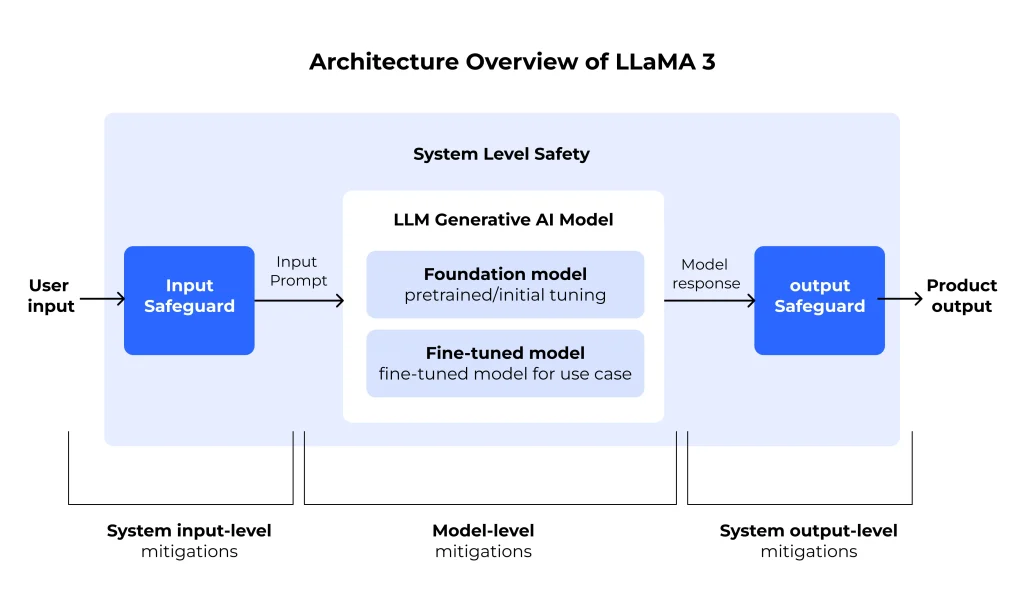
Released by Meta AI in April 2024, LLaMA 3 is Meta’s flagship open-weight language model series, giving developers better control and more customization options. It comes in two powerful variants, 8B and 70B parameters, with a larger 400 B+ model rumored to be in the pipeline.
It is built on an open-source philosophy; LLaMA 3 is trained on a huge 15 trillion token dataset, which includes different multilingual sources, which improves its generalization.
Its open-weight nature makes it ideal for researchers and enterprises focused on LLM development without vendor lock-in. In the LLaMA 3 vs ChatGPT 4 debate, LLaMA 3 stands out for transparency, cost efficiency, and flexibility in private or local deployments.
Overview of GPT 4
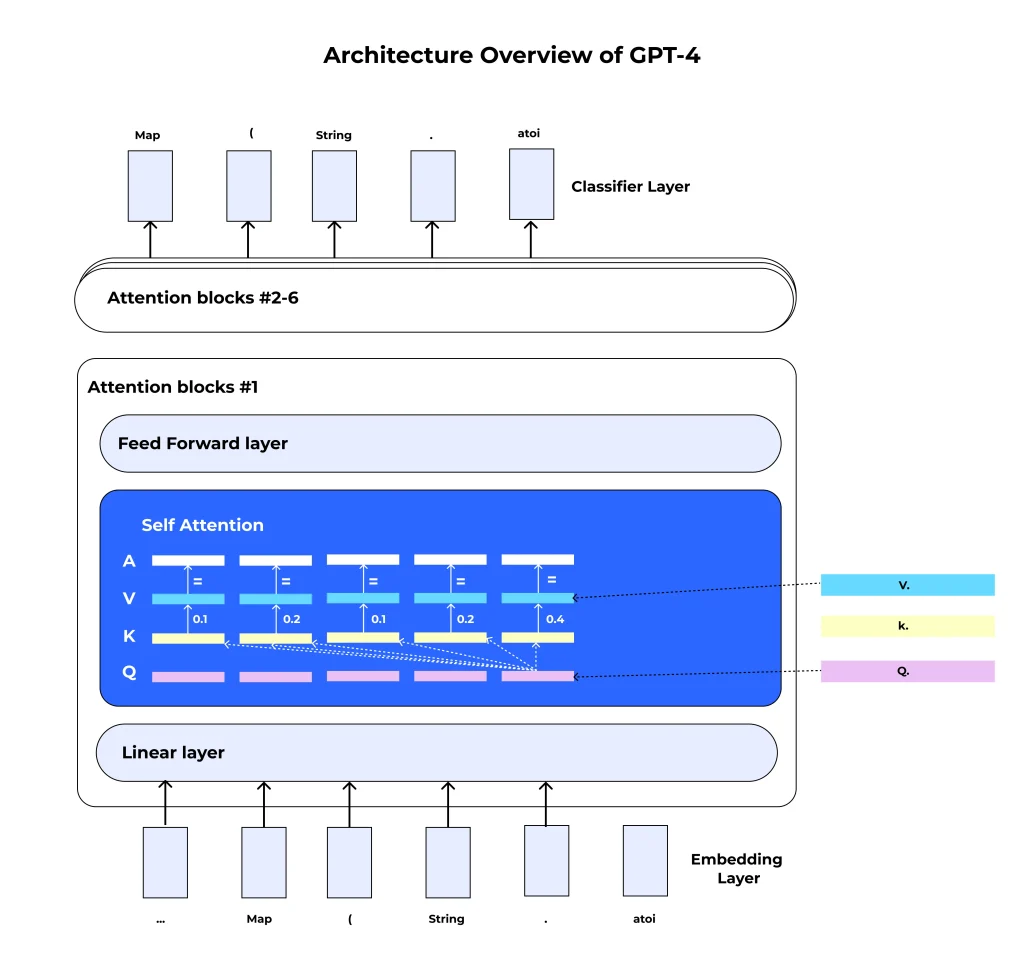
Launched by OpenAI in March 2023, GPT-4 is a cutting-edge proprietary language model known for its exceptional accuracy and reasoning capabilities. It comes in three major variants: GPT-4, which is a faster GPT model, and the multimodal GPT-4o, which supports text, image, and audio inputs.
Unlike open models, GPT-4 is accessible only via API or through the ChatGPT solution (ChatGPT Plus or Enterprise Plans).
In the GPT 4 vs LLaMA 3 discussion, GPT-4 shines in production environments that demand scalability, reliability, and advanced multimodal features. It is a closed architecture that limits customization but gives consistent, high-quality output for enterprise and consumer-facing applications. Now that we’ve explored both models individually, let’s break down their key differences to see how they truly compare.
LLaMA 3 vs GPT-4: Core Differences That Matter
When it comes to choosing the correct model for your AI stack, understanding its foundational differences is key. The side-by-side look at LLaMA 3 vs GPT-4 highlights where each model stands in terms of openness, performance, and capabilities.
| Feature | LLaMA 3 | GPT-4 / GPT-4o |
| Model Size | 8B, 70B (400B rumored) | Undisclosed |
| Open Source | Yes | No |
| Cost | Free (weights available) | Paid API (ChatGPT Plus etc.) |
| Modality | Text | Text, Image, Audio (GPT-4o) |
| Training Data | 15T tokens | Undisclosed |
| Performance | Competitive | Industry benchmark |
Model Size:
- LLaMA 3 is available in 8B and 70B versions, with a 400 B+ model rumored.
- GPT-4’s parameter count remains undisclosed, though it’s speculated to be extremely large.
Open Source:
- LLaMA 3 follows an open-weight approach, which is ideal for transparent research.
- GPT-4 is proprietary, limiting access to API-based usage only.
Cost:
- LLaMA 3 is free to use and modify, making it cost-efficient.
- GPT-4 requires a paid subscription (ChatGPT Plus or API).
Modality:
- LLaMA 3 handles text only.
- GPT-4o supports text, image, and audio input natively.
Training Data:
- LLaMA 3 is trained on 15T diverse, multilingual tokens.
- GPT-4’s dataset details are not publicly shared, but it is surely trained on large datasets.
Performance:
- LLaMA 3 delivers strong results, especially with LLM fine-tuning.
- GPT-4 sets industry benchmarks in reasoning and coherence.
Additional Read: Mistral vs Llama 3: Key Differences & Best Use Cases
Performance Showdown: Where Each Model Excels
When it comes to choosing between models for real-world use, performance across key tasks is important. In the battle of LLaMA 3 vs GPT-4, both have impressive strengths, but their edge varies depending on the use case. Whether you are building an AI service or deploying at scale, here’s how they compare:
General Language Understanding:
- GPT-4 leads with nuanced reasoning and contextual accuracy.
- LLaMA 3 performs competitively but may trail in complex prompts.
Code Generation & Math Tasks:
- GPT-4 handles logic-heavy tasks and coding with great precision.
- LLaMA 3 holds up well but benefits greatly from fine-tuning.
Multilingual Capabilities:
- LLaMA 3’s training on 15T multilingual tokens makes it different.
- GPT-4 still performs slightly in rare languages and coherence.
Latency & Inference Speed:
- LLaMA 3 runs faster locally due to its open weights.
- GPT-4 offers optimized speed via OpenAI’s backend.
Multimodal Intelligence: How Far Can They Go?
One of the biggest frontiers in the LLaMA 3 vs GPT 4 comparison lies in how each model handles various input types.
- GPT – 40’s Edge
- GPT-4o shines in multimodality, accepting text, images, and audio.
- It makes a top choice for interactive AI tools, visual assistants, and intelligent agents.
- LLaMA 3’s Limitation
- LLaMA 3 is currently limited to text-only input.
- While open-weight versions might evolve through fine-tuning, native support for images or audio isn’t available yet.
Let’s now explore how these models perform when put to work because real-world use cases often reveal more than benchmarks ever could.
Use Case Fit: Which Model Works Best for You?
The majority of selecting the correct model comes down to practical application. From open search research to enterprise-grade tools, both LLaMA 3 and GPT – 4 serve distinct user needs. Here’s how LLaMA 3 vs ChatGPT 4 plays out in real-world scenarios:
LLaMA 3 is Ideal For:
- Developers who look for open models for deep customization and LLM deployment control.
- Academic institutions and researchers are seeking transparency in training and architecture.
- Organizations prioritize device performance or privacy-focused use cases.
GPT 4 is Ideal For:
- Enterprises need top-tier reasoning, accuracy, and consistency in results.
- AI-driven products require multimodal interaction across text, audio, and image.
- Scenarios demanding low-latency responses with strong cloud-based infrastructure.
Whether you are building for innovation or scale, aligning use cases with capabilities make sure the best return on your AI strategy.
Trust & Transparency: Who Gives You More Control?
When choosing an LLM, privacy and transparency often tip the scale, especially for teams working in sensitive, regulated, or internal environments. Here’s how LLaMA 3 vs GPT 4 differs on these fronts:
LLaMA 3:
- Built with an open-weight philosophy, LLaMA 3 offers full visibility into its architecture and training process.
- Its customizable design makes it a strong choice for privacy-focused teams that need on-premise deployment or fine-grained control.
GPT-4
- As a proprietary, closed-source model, GPT-4 runs via hosted APIs, limiting user access to its inner workings.
- While it ensures reliability and consistent performance, it lacks transparency and restricts custom controls.
Whether your priority is compliance or experimentation, this distinction plays an important role in selecting the right model for your needs.
Final Verdict: Which Model Should You Choose?
In the LLaMA 3 vs GPT 4 debate, the right choice ultimately hinges on your project goals. LLaMA 3 empowers developers with open-source flexibility, which is ideal for custom LLM development and private deployments. Meanwhile, GPT-4 excels in enterprise-grade performance, multimodal capability, and consistent reliability.
Whether you’re building a Custom ChatGPT solution, an AI research assistant, or a full-scale intelligent product, aligning your use case with the right model is crucial for success. For that reason, we are here to help.
At Openxcell, we specialize in AI innovation, from GPT integration and custom LLM development to enterprise-ready AI solutions. Our experts help you deploy the best-fit models like LLaMA or GPT into real-world products with speed, security, and scale.


Manushi, a former literature student, now crafts content as a writer. Her style merges simple yet profound ideas. Intrigued by literature and technology, she strives to produce content that captivates and stimulates.