Base44 vs Lovable: Which Internal Tools Platform Is Best?
 Last updated:February 23, 2026
 12 Min Read
- What Is Base44?
- Strengths:
- Ideal For:
- What Is Lovable?
- Strengths:
- Ideal For:
- Base44 vs Lovable: In-Depth Comparison
- 1. Ease of Use
- 2. Workflow Automation & Rules
- 3. Data Integration
- 4. Scalability
- 5. Custom Logic & Business Rules
- Base44 vs Lovable — Feature Comparison Table
- Key Takeaways from the Table
- When to Choose Base44
- Choose Base44 if your project involves:
- When to Choose Lovable
- Choose Lovable if your project involves:
- Cost Comparison: Base44 vs Lovable
- Base44 vs Lovable: Key Limitations
- Lovable Limitations
- Base44 Limitations
- Beyond the Blueprint: Why Custom Development is Your Final Destination
- Final Verdict: Choosing Your Growth Engine
- FAQs
- 1. What is the difference between Base44 and Lovable?
- 2. Which platform is easier to use?
- 3. Can Base44 and Lovable integrate with external data sources?
- 4. Are there limitations to using no-code tools like Base44 and Lovable?
- 5. Can I migrate from Base44 or Lovable to a custom internal tool later?


Quick Summary
- Base44 suits complex, data-heavy internal tools.
- Lovable is better for simple dashboards and fast builds.
- Automation and integrations favor Base44.
- Ease of use and speed favor Lovable.
- Base44 vs Lovable ultimately depends on scale, workflows, and long-term growth plans.
Did you know that by 2026, Gartner has predicted that 70% of new enterprise apps will be built using low-code or no-code technologies? This shift isn’t just a trend; it is a response to the global talent shortage and the urgent need for business agility. As organizations race to automate their internal workflows, the debate mainly centers on choosing the right engine for growth.
Enter the showdown of the year: Base44 vs Lovable, both platforms promise to slash development time, it serves very different masters, one focuses on strong, logic heavy data orchestration, while other uses cutting edge AI to build sleek, user ready interfaces in minutes.
Deciding between these two requires a deep dive into your technical goals and often, the most successful firms bridge this gap by working with expert AI development services to make sure their tools are powerful and scalable.
Let’s break down which one truly fits your business.
What Is Base44?
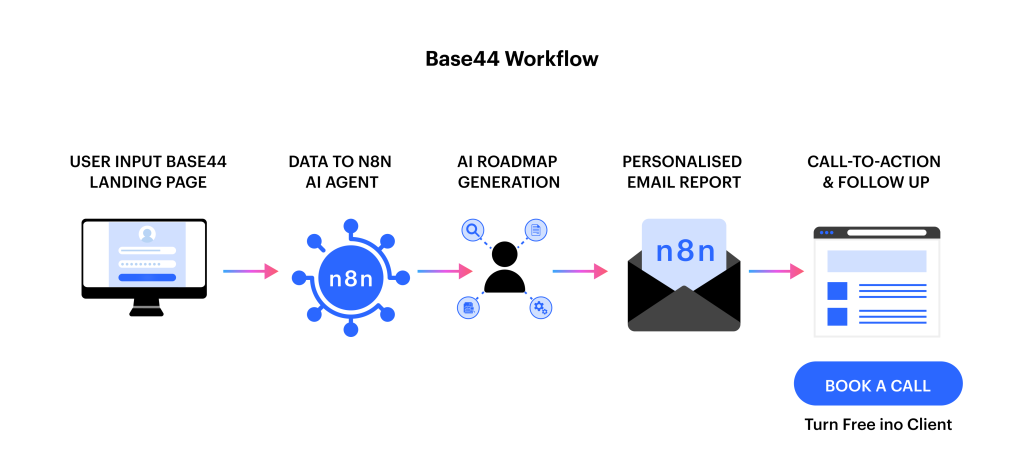
When comparing Lovable vs Base44, understanding Base44’s core capabilities is important. Base44 is an internal tools platform designed to help businesses build complex, data-driven applications with advanced workflows and structured logic. It strongly focuses on scalability, automation, and deep integrations, making it perfect for growing teams that need more than just simple dashboards.
Strengths:
- Advanced Workflow Automation
It supports multi-step processes, rule-based triggers, and conditional logic.
- Extensive Integrations
Connects easily to multiple databases, APIs, and third-party systems.
- Granular Permissions & Roles
Offers detailed access control for enterprise teams.
- Scalable Architecture
Designed to handle growing data and operational complexity.
Ideal For:
- Data-driven organizations
- Operations-heavy teams
- Enterprises building complex internal tools
What Is Lovable?
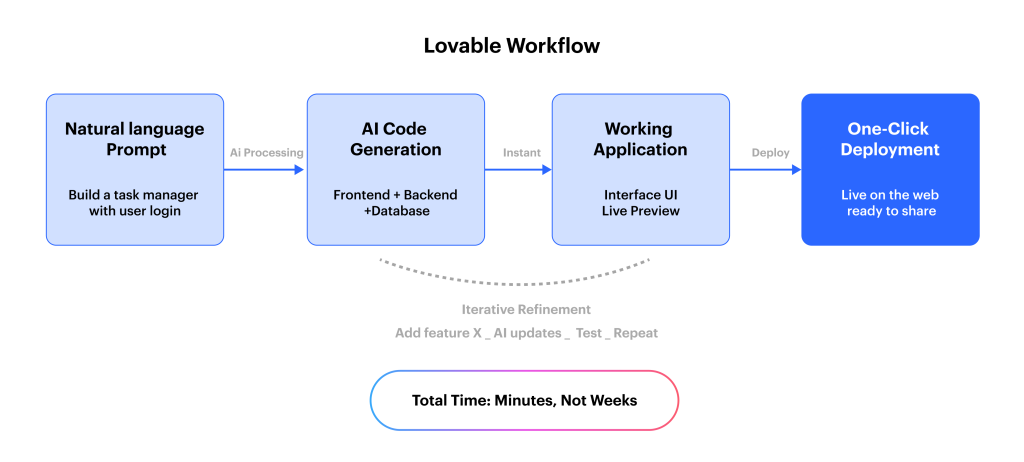
Lovable is a no-code internal tools platform focused on simplicity and speed. It helps teams to build dashboard forms and lightweight apps quickly without extensive technical expertise. As it excels at rapid prototyping and basic internal tools, some businesses may outgrow its capabilities and explore lovable alternatives for more advanced needs.
Strengths:
- User-Friendly Interface
It has a simple drag-and-drop design ideal for non-tech users.
- Fast Setup
Lovable quickly deploys internal dashboards and basic tools.
- Low Learning Curve
Have easy onboarding for teams with minimal technical background.
- Cost-Effective for Small Projects
Gives an affordable entry point for early-stage tools.
Ideal For:
- Small teams needing quick internal apps
- Non-technical business users
- Projects with limited automation and integration requirements
Base44 vs Lovable: In-Depth Comparison
Choosing the correct platform needs looking beyond the interface to how each tool handles the heavy lifting of business logic and data. While both aim to simplify development, their architectural philosophies differ significantly. If you are an enterprise software development company looking to build for the long term, understanding these nuances is critical.
1. Ease of Use
Base44 offers a “zero-configuration” experience, making it the fastest way to go from a prompt to a live URL. It’s a managed ecosystem that handles everything, which is perfect for those seeking Base44 alternatives that don’t require technical setup. Lovable is equally intuitive but focuses on a “vibe coding” flow where you refine React components in real-time, offering a slightly more “developer-centric” feel.
2. Workflow Automation & Rules
In the Base44 vs Lovable debate, Base44 shines with its built-in automation for common business tasks like emails and role-based access. Lovable, however, allows for more sophisticated, custom-coded logic since it generates standard TypeScript/React code that can be fine-tuned for complex multi-step processes.
3. Data Integration
Base44 uses a proprietary, managed database that works out of the box but can be harder to migrate. Lovable natively integrates with Supabase, giving you full control over your PostgreSQL database, schemas, and external API connections from day one.
4. Scalability
Lovable wins on architectural scalability because you can export your code to GitHub, and you aren’t locked into the platform. Base44 is excellent for rapid MVPs, but enterprise-level scaling often requires the custom flexibility that a dedicated development team provides.
5. Custom Logic & Business Rules
Base44 handles “standard” business rules via simple prompts. Lovable allows for deeper customization because it doesn’t hide the code, making it the better choice for tools requiring unique, high-security, or non-standard logic.
Base44 vs Lovable — Feature Comparison Table
To help you quickly grasp the core differences between Base44 and Lovable, here is a side-by-side feature comparison that highlights how each platform stacks up across key criteria. This format makes it easy to see where every tool shines and where it may fall short depending on your business needs.
| Feature | Base44 | Lovable |
| Ease of Setup | Moderate | Very Easy |
| UI/UX Simplicity | Good | Excellent |
| Workflow Automation | Advanced | Basic |
| Data Source Integrations | Extensive | Limited |
| Permissioning & Roles | Advanced | Basic |
| Scalability | High | Medium |
| Ideal Use Case | Complex Internal Tools | Simple Dashboards |
| Best For | Data-Driven Teams | Non-Tech Teams |
Key Takeaways from the Table
- Setup & Usability: Lovable wins on ease of simplicity and setup, perfect for non-technical teams.
- Automation & Integrations: Base44 gives strong automation and broader data connectivity.
- Scalability & Permissions: Base44 is better suited for enterprise-grade systems with complex access controls.
- Use Case Fit: It is better to choose Base44 for heavy-duty internal tools and Lovable for quick, lightweight dashboards.
This comparison provides a clear lens on where each platform excels and helps inform your internal tooling strategy.
Additional Read: Lovable vs Bolt: Which Platform Actually Fits Your Development Workflow?
When to Choose Base44
When it comes to deciding on Lovable vs Base44, it often comes down to a trade-off between design flexibility and operational depth. Base44 is mainly designed for businesses that need a battery-included environment where the backend, hosting, and business logic are easily woven together from the first prompt.
While a custom software development company is ideal for unique, high-security builds, Base44 gives a powerful shortcut for teams that need heavy-duty logic without the engineering overhead.
Choose Base44 if your project involves:
- Complex Workflows: Use this platform when your tool requires multi-stage approvals, automated notifications, and intricate branching logic that must function reliably out of the box.
- Multiple Data Sources: It is the right choice if you need to unify disparate data from SQL databases, spreadsheets, and third-party APIs into a single, cohesive internal command center.
- Rule-Based Automation: Choose Base44 to handle rigorous business rules, like automated status updates or recurring data syncs, without manually configuring external cron jobs.
- Enterprise-Scale Internal Tools: It is ideal for creating strong employee portals or resource management systems that need stable, managed infrastructure and pre-built security protocols.
- Integration with Existing Systems: Opt for this tool when you need deep, native connections to legacy software or popular business suites like Slack, Notion, and Google Workspace.
When to Choose Lovable
As we know, Base44 is a powerhouse for structured logic, where Lovable is often a superior choice for projects that prioritize design, speed, and future-proof code ownership. As a leading product engineering tool, Lovable bridges the gap between a quick sketch and a professional application by generating clean, exportable React code.
If your goal is to validate an idea with a polished interface before moving toward Lovable alternatives or custom build, this platform provides the most intuitive coding experience available today.
Choose Lovable if your project involves:
- Simple Dashboards: Perfect for creating visually stunning analytics views and executive summaries where the clarity of data presentation is just as important as the numbers themselves.
- Fast Internal MVP Builds: The go-to solution for shipping a functional Minimum Viable Product in days, allowing you to gather user feedback and iterate without the traditional development lag.
- Non-Technical Teams Building Tools: Empowers marketing, sales, or HR departments to build their own utility apps through natural language prompts, bypassing the need for a dedicated engineering queue.
- Basic CRUD Workflows: Streamlines the creation of standard “Create, Read, Update, Delete” applications, such as lead trackers or inventory lists, with zero manual boilerplate coding required.
- Budget-Sensitive Early-Stage Teams: Offers a highly cost-effective entry point for startups that need a high-end look and feel without the five-figure price tag of custom agency work.
Case Study: Internal Tool Built with Custom Development
One of the great examples of how a custom internal system can change business operations is Orderhive, a scalable SaaS platform for inventory and order management developed by Openxcell.
We helped the client to design and build this robust solution from the ground up, integrating complex inventory workflows, multi-channel order automation, and reporting dashboards that streamline operations for both retailers and wholesalers worldwide.
The power of custom-built internal tools goes beyond the limitations of generic platforms like Base44 or Lovable alternatives.
Cost Comparison: Base44 vs Lovable
Understanding pricing differences can make or break your internal tooling decisions, mainly when evaluating Base44 alternatives alongside Lovable. Here is the simplified cost comparison to help you see which platform aligns with your budget and growth plans.
| Cost Level | Base44 | Lovable |
| Free Tier | Limited | Available |
| Entry-Level | Medium | Low |
| Enterprise Tier | High | Medium |
| Custom Deployment | Supported | Limited |
Key Takeaways
- Free Tier: Lovable offers a more generous free tier, making it easier to get started without a commitment.
- Entry-Level Cost: Lovable is more affordable for basic needs, while Base44 sits in the middle.
- Enterprise Pricing: Base44’s advanced features are priced higher for enterprises.
Custom Deployment: Base44 supports deeper customization, while Lovable has limitations.

Base44 vs Lovable: Key Limitations
Each development tool has its breaking point, and identifying these early can save your business from a costly mid-project migration. While the Lovable vs Base44 debate mainly focuses on speed, the long-term success of your internal tool depends on how you navigate their inherent constraints.
Lovable Limitations
Lovable is an incredible “vibe to code” engine, but this isn’t a magic bullet for every enterprise scenario.
- Limited Advanced Automation: While it handles basic triggers, the platform can struggle with complex, multi-step backend background jobs that require persistent scheduling.
- Not Ideal for Complex Workflows: As logic becomes deeply nested, the AI may enter “debugging loops,” sometimes reintroducing old bugs while trying to fix new ones.
- Scalability Constraints: While you can export the code, the generated architecture may eventually require a manual rewrite to handle high-concurrency traffic or strict enterprise compliance like HIPAA.
Base44 Limitations
Base44 is a powerhouse for structured data, but its “all-in-one” managed approach comes with trade-offs.
- Slightly Steeper Learning Curve: Because it handles full-stack orchestration, including databases and role-based permissions, non-technical users may find the initial configuration more complex than a simple UI builder.
- Overkill for Simple Dashboards: If you only need a basic visual tracker, Base44’s extensive backend capabilities might feel unnecessarily heavy and slow to deploy.
- Higher Entry Cost: With a credit-based system that charges for both “builder messages” and “user integrations,” the cost can escalate quickly as your internal team grows.
Related Read: Replit vs Lovable: Which AI Platform Offers the Best Value
Beyond the Blueprint: Why Custom Development is Your Final Destination
Platforms like Base44 and Lovaable are game changers for quick prototyping, but they mainly serve as a starting line rather than a finish line for high-growth enterprises. The no-code tools eventually hit a glass ceiling where proprietary constraints, per-using pricing, and limited backend control begin to stifle innovation.
When your business logic needs highly specialized algorithms, strict HIPAA or SOC 2 compliance, or the ability to serve thousands of concurrent users without lag, the limitations of Lovable alternatives become a bottleneck.
The custom development is a strategic choice for teams that demand total ownership and infinite scalability. Unlike no-code builders that keep you locked into their ecosystem, a custom-built tool belongs to you, meaning no monthly platform fees and freedom to integrate with any legacy system.
By investing in a bespoke solution, one can make sure that your internal infrastructure evolves alongside your business, rather than being held back by the features of a third-party roadmap.
Final Verdict: Choosing Your Growth Engine
Lastly, when it comes to choosing between Base44 vs Lovable, it ultimately hinges on priority: operational depth or design-driven speed. The Base44 is a powerhouse for vibe coding full-stack internal tools with managed backends and complex business rules. Meanwhile, Lovable excels at creating polished, developer-driven React apps that offer superior code ownership and UI flexibility.
Understanding the nuances of each platform is important for any modern business looking to bridge the gap between a quick prototype and a sustainable, high-performance operation.
At Openxcell, we understand that while AI-driven builders give a fantastic head start, long-term success often needs a custom touch. As a leading software development partner, we specialize in scaling internal tools beyond the limits of no code, making sure your infrastructure is secure, bespoke, and future-proof.

FAQs
1. What is the difference between Base44 and Lovable?
In the Base44 vs Lovable debate, Base44 is an all-in-one managed platform that handles the backend, database, and logic out of the box. Lovable focuses on generating high-quality React/TypeScript code and provides better flexibility for developers to export and own their codebase.
2. Which platform is easier to use?
Lovable is generally considered easier for rapid UI prototyping and “vibe coding.” Base44 has a slightly higher learning curve due to its integrated backend management, but it is faster for launching functional full-stack tools.
3. Can Base44 and Lovable integrate with external data sources?
Yes. Both support API connections, though Base44 offers more “built-in” connectors for enterprise tools like Slack and Google Sheets, while Lovable typically pairs with Supabase for data management.
4. Are there limitations to using no-code tools like Base44 and Lovable?
Yes, primary limitations include “vendor lock-in,” per-user or credit-based pricing that can become expensive at scale, and constraints on highly specialized security or logic requirements.
5. Can I migrate from Base44 or Lovable to a custom internal tool later?
Yes. Lovable makes this easier through GitHub sync and code export. Migrating from Base44 is possible but may require a more significant backend rebuild since its core logic is hosted within its proprietary environment.

Manushi, a former literature student, now crafts content as a writer. Her style merges simple yet profound ideas. Intrigued by literature and technology, she strives to produce content that captivates and stimulates.