The Rise of AI in RPA: Smarter and Scalable Automation
 Last updated:February 4, 2026
 19 Min Read
- What Is the Difference Between AI and RPA?
- What Happens When AI Meets RPA? Introducing Intelligent Process Automation
- The Current Landscape of Intelligent Process Automation
- How does RPA support AI in the Real World?
- AI Training Data Preparation
- Integrating with Legacy Systems
- Improving Explainability
- Enabling Human-in-the-Loop Workflows
- Monitoring and Tracking AI Performance
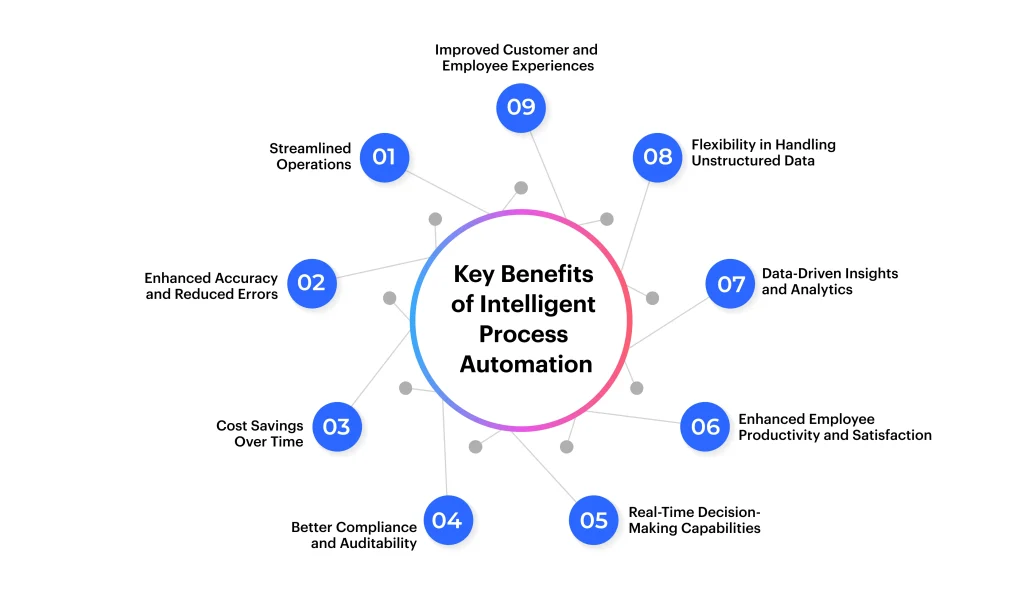
- Key Benefits of Intelligent Process Automation
- 1. Streamlined Operations
- 2. Enhanced Accuracy and Reduced Errors
- 3. Cost Savings Over Time
- 4. Better Compliance and Auditability
- 5. Real-Time Decision-Making Capabilities
- 6. Enhanced Employee Productivity and Satisfaction
- 7. Data-Driven Insights and Analytics
- 8. Flexibility in Handling Unstructured Data
- 9. Improved Customer and Employee Experiences
- Common Challenges of RPA and AI
- 1. Skill and Knowledge Gaps
- 2. System Compatibility and Integration
- 3. Data Privacy and Security Concerns
- 4. Regulatory and Compliance Hurdles
- 5. Difficulty Identifying Automation Opportunities
- 6. Insufficient Tools for Building Scalable AI
- 7. Resistance to Organizational Change
- 8. Complexity in Handling Unstructured Data
- 10 Common Use Cases of RPA and AI
- 1. Invoice Processing
- 2. Employee Onboarding
- 3. Inventory Management
- 4. Risk and Compliance Management
- 5. Predictive Maintenance
- 6. eCommerce recommendations
- 7. Chatbots and Virtual Assistants
- 8. Market and Customer Sentiment Analysis
- 9. Claims Processing
- 10. Fraud Detection and Anti-Money Laundering
- Building a Future-Ready Business with IPA
- 1. Accessing your Current Automation Readiness
- 2. Define the Scope and Objectives
- 3. Conduct Feasibility and Impact Analysis
- 4. Align Stakeholders and Set Clear Business Goals
- 5. Choose Appropriate RPA and AI Tools
- 6. Build a Cross-Functional Team
- 7. Design, Develop, and Test AI Solutions
- 8. Integrate with Existing Systems and Deploy in Phases
- 9. Invest in Training and Change Management
- 10. Monitor, Optimize, and Expand Automation
- Final Thoughts on AI for RPA


Summary:
AI for RPA is changing how businesses operate by connecting automation speed with agility to deliver promptness, efficiency, and smarter decision-making. From back-office tasks to increasing customer engagement, IPA is becoming a crucial part of small to big organizations.
- Remove all routine tasks like employee onboarding and report generation
- Deliver highly personalized shopping by gathering insights in real-time
- Streamline complex workflows like invoice processing
And the list doesn’t end here. In this blog, we explain how IPA is changing the business game for various industries. Curious how AI and RPA work together? Let’s dive in.
What if business issues, repetitive tasks, and complex decisions are handled, not by hiring more people but by having machines that can think and act? That’s the question businesses are exploring currently.
While artificial intelligence helps quick and efficient decision-making, robotic process automation is there to streamline repetitive, rule-based tasks with unmatched efficiency. Moreover, combining AI in RPA leads to a better solution – Intelligent Process Automation.
Various startups, businesses, and enterprises are now considering AI and RPA for tasks like invoice processing, fraud detection, exceptional customer support, predictive analytics, and more. The power of intelligent process automation is changing completely the way businesses operate. Many of these businesses are turning towards AI development services to develop innovative solutions that align with their needs.
In this blog, we will explain the differences between AI and RPA, the growing demand for intelligent process automation, key benefits, common challenges, and real-world use cases. Check out how AI for RPA transforms the way businesses work and survive in this intelligent automation revolution.
What Is the Difference Between AI and RPA?
Robotic process automation (RPA) is a technology that uses robots to streamline repetitive, rule-based processes by mimicking human actions in digital systems. These robots perform automated tasks with great precision and speed, as per their programmed instructions. For instance, an RPA bot can log into an application or software, extract an invoice, and update necessary tasks without human intervention.
Artificial Intelligence allows machines to mimic human intelligence to conduct essential tasks like cognitive learning, reasoning, decision-making, and identifying errors and efficiencies in correction. For instance, AI can analyze customer feedback to find their thoughts and requirements, thus enabling businesses to deliver better services and modify marketing strategies.
Here we compare AI and RPA based on some essential factors.
| Aspect | RPA | AI |
| Core Functionality | Task execution | Data analysis, learning, and prediction |
| Data Handling | Structured data only | All kinds of data (structured, semi-structured, or unstructured) |
| Learning Capability | Follows a particular set of defined rules, with no extra learning | Learn, adapt, and make data-backed decisions over time |
| Decision-Making | Limited to pre-set rules | Make complex decisions based on the context |
| Flexibility | Low flexibility as per the workflow, needs extra input for more work | Highly flexible and scalable, it can change as per the data variations |
| Integration with Other Technologies | Simple to integrate with legacy systems | Many times, it requires set of integration frameworks or models |
| Human Intervention | Less human intervention after deployment | Might require continuous tracking and human feedback |
| Use-Case Example | Streamlining data entry | Analyzing medical images to detect diseases |
What Happens When AI Meets RPA? Introducing Intelligent Process Automation
Intelligent Process Automation (IPA) is a robust approach that combines robotic process automation, artificial intelligence, and machine learning to streamline everything from simple to complex business processes. IPA goes beyond rule-based automation by enabling systems to learn, adapt, and make data-driven decisions, whether the data is structured or unstructured.
Unlike traditional automation, IPA can analyze data, identify patterns, and even interact with humans in real time. These things make IPA suitable for complex workflows that require better decision-making, contextual awareness, continuous learning, and optimization.
As more businesses aim to scale and automate their day-to-day workflows, the need for IPA is reaching new levels. Why? Because it offers enhanced speed, accuracy, scalability, and intelligence, thus improving the entire workflow. In short, IPA is helping businesses transform workflows and stay competitive in the digital age.
Let’s understand IPA with a simple example: opening a bank account. RPA handles tasks like profile verification, form filling, and account creation. Meanwhile, AI manages tasks like customer queries via chatbot, automates compliance checks, and detects fraud. IPA combines its strengths to handle the entire process seamlessly.
The Current Landscape of Intelligent Process Automation
With businesses trying to improve everyday, the adoption of Intelligent Process Automation (IPA) is getting higher and higher. Here are some of the key statistics that indicate the sudden growth and industry impact.
- According to GrandViewResearch, the global intelligent process automation market was valued at $14.55 billion in 2024, and it is anticipated to grow at a CAGR of 22.6% from 2025 to 2030.
- The RPA market is anticipated to increase from $28.31 billion in 2025 to $211.0 billion in 2034.
- The adoption of AI by employees in the United States has nearly doubled from 21% to 40%.
Moreover, AI adoption rates are constantly growing as organizations look forward to enhancing efficiency and decreasing costs. This is happening particularly in sectors such as baking, manufacturing, healthcare, and more.
As we observe, more and more industries are adopting IPA to robotize complex workflows and improve decision-making. Technology is definitely going to become a crucial strategy for the digital revolution in various industries.
How does RPA support AI in the Real World?
RPA and AI are not just random buzzwords; they are responsible for transforming many industries together. Are you excited to know how RPA supports AI in the real world? Let’s understand how RPA plays a vital role in AI success.
AI Training Data Preparation
RPA bots collect, clean, and organize a massive amount of structured and unstructured data from multiple sources, such as emails, databases, forms, and legacy systems. This data is injected into AI models to enhance decision-making capabilities and make relevant predictions.
Integrating with Legacy Systems
Various legacy systems lack APIs, modern interfaces, or connectors. RPAs can bridge the gap between legacy systems and the latest AI tools by mimicking user actions. This further allows the AI models to access and exchange data without making severe infrastructure changes.
Improving Explainability
RPA tracks every step an AI model performs, enhancing transparency and traceability. It further allows the model to explain how it reached the particular result, which is necessary in industries such as finance and healthcare.
Enabling Human-in-the-Loop Workflows
RPA bots can be programmed well to make several essential decisions made by AI. This helps to flag and report outputs for human validation, which is required primarily for outputs or AI-based processes with high uncertainty.
Monitoring and Tracking AI Performance
RPA bots can monitor the performance of AI models in the development, look for errors or biases, and flag data errors. AI models deliver essential outputs based on their trained data. Here, there is the possibility of more bugs or biases in the AI’s logic if the data is learning through changes. RPA bots can be further programmed to test and track how AI is working constantly.
Key Benefits of Intelligent Process Automation
Intelligent process automation is transforming the way businesses utilize speed, accuracy, and thoughtful decision-making. Here are several key benefits that are driving transformation in varied industries.
1. Streamlined Operations
Intelligent process automation simplifies business operations and repetitive and routine tasks across various departments from start to finish. This helps remove any bottlenecks or manual issues and makes business workflows & operations smoother.
With IPA looking after all the tasks in different departments like HR, finance, etc., employees can invest more time and effort in strategic projects that help organizations be more agile and responsive to change.
2. Enhanced Accuracy and Reduced Errors
Humans often get tired or are prone to distractions. On the other hand, robots follow precise rules and use AI to understand the data patterns. Hence, the primary benefit of AI in RPA is that it delivers more accurate and consistent outputs every time.
Whether there is a need for generating reports, automating validation & data entry, or processing invoices, organizations can trust IPA to deliver accurate results with the highest quality without any errors.
3. Cost Savings Over Time
IPA implementation requires a sufficient investment initially, but it pays off by reducing human dependency and operational issues. Automating rule-based and repetitive tasks leads to faster processes and fewer resources, thus leading to substantial cost savings.
Over time, businesses can utilize humans and machines in the best possible way, ensuring they operate where required. This results in smaller teams, reduced overhead, enhanced ROI, and freeing up capital for expansion in different directions.
4. Better Compliance and Auditability
AI in RPA implements the regulatory rules automatically, thus ensuring every step in the business process is documented with logs and is traceable. This not only helps to fulfill the compliance standards but also helps to pass the audits effectively.
With built-in rules for automation tracking, organizations can fulfill industry requirements while reducing the risks of non-compliance.
For instance, in financial institutions, RPA helps streamline anti-money laundering checks, while AI constantly monitors transactions for suspicious activity. This merger of AI and RPA leads to strict adherence to standards and even protects an organization’s reputation and financial stability.
5. Real-Time Decision-Making Capabilities
By integrating AI in RPA, IPA allows businesses to analyze data on the go and provide quick responses to evolving business needs. This real-time agility helps to make better decisions, whether it’s approving a loan or rerouting a support ticket.
This instant responsiveness allows businesses to seize crucial opportunities and reduce risks quickly, staying competitive in an evolving market.
6. Enhanced Employee Productivity and Satisfaction
AI in RPA removes the burden on employees by automating various mundane tasks. Hence, they can now focus on more strategic, creative, and meaningful work. This results in higher job satisfaction and offers ample opportunities for skill development and professional growth. By automating tasks, businesses even see a significant drop in employee burnout. Ultimately, higher satisfaction results in more productivity.
7. Data-Driven Insights and Analytics
Collecting and analyzing data helps a business achieve goals effectively in a tech-driven world. AI in RPA allows companies to gather data from a vast number of sources and analyze it well to find trends and opportunities that usually go unnoticed. These actionable insights enable the business to make data-driven decisions for growth and innovation.
With live dashboards and predictive analytics, businesses can improve operations on the go and even discover areas that need more attention and growth.
8. Flexibility in Handling Unstructured Data
One of IPA’s key benefits is its ability to process unstructured data. Compared to traditional automation, IPA utilizes methods like NLP and image recognition to read emails, analyze documents & voice inputs, and more. In short, it can understand users’ intent and help them make smart decisions.
This opens up new usable insights for automating knowledge work and improving operational efficiency.
9. Improved Customer and Employee Experiences
Repetitive, rule-based tasks often decrease employee morale and slow down customer service. This mainly results in annoyance on both the customer and employee sides.
AI in RPA allows employees to provide responsive and highly personalized experiences to customers. How? It automates tasks and enables employees to give attention to value-driven tasks. Simultaneously, customers obtain faster services, fewer errors, and intelligent responses, leading to better interactions.

Common Challenges of RPA and AI
Even the leading technologies have other kinds of hurdles. To implement RPA and AI together, organizations and businesses need to deal with several technical, cultural, and strategic challenges that can impact adoption and long-term value.
1. Skill and Knowledge Gaps
Various organizations face challenges in finding talent with the proper knowledge of the technical and strategic skills required for RPA and AI projects. This gap slows the implementation and even impacts the long-term effectiveness of automation efforts.
One way to deal with this is to train staff on the necessary things. Secondly, you can hire a process-as-a-service vendor who handles everything associated with AI.
2. System Compatibility and Integration
Legacy systems usually don’t blend well with automation technologies. Integrating AI and RPA with existing systems and infrastructure is challenging because of compatibility issues or diverse technology stacks. It often requires higher customisation, causing delays and additional costs.
To address this, conduct a detailed assessment of the existing systems and infrastructure. Choose AI and RPA solutions, which are popular for interoperability and provide adjustable integration capabilities. Consider utilizing middleware or API-based integrations to remove the gaps between diverse systems.
3. Data Privacy and Security Concerns
Automating various processes that manage sensitive data results in higher security and privacy risks. Without strong data protection laws, companies can face breaches or fail to comply with data regulations.
Implementing robust encryption, access controls, and data governance keeps data secure and removes any risks.
4. Regulatory and Compliance Hurdles
IPA must comply with the strict industry regulations, which might be challenging. Businesses must ensure that their automatic workflows adhere to the constantly changing laws and standards, which differ from every region and sector.
Frequent compliance audits and usage of the AI tools ensure operations are happening as per the guidelines.
5. Difficulty Identifying Automation Opportunities
Identifying the right processes for automation is not as simple as you think. Without a proper plan and process mapping, businesses struggle to find tasks that deliver the best value, which results in wasted resources or failed initiatives.
Conducting in-depth process assessments and involving diverse teams helps to identify the suitable areas for automation.
6. Insufficient Tools for Building Scalable AI
Various businesses start with some of the most primary tools that will not scale in the future. With the rising demand, these tools don’t support highly advanced AI needs, thus stopping growth. Hence, these organizations find it challenging to expand automation beyond their basic projects and leave an enterprise-level impact.
Investing in scalable automation platforms and cloud-based AI solutions can help businesses achieve long-term success.
7. Resistance to Organizational Change
Implementing automation in different parts of the organization will raise employees’ fear of job loss or disruption, leading to resistance. To deal with this, you need proper change management, clear communication, and emphasis on upskilling and engagement.
By building a culture where new ideas are welcomed, you can ensure that the employee’s transformation journey is efficient.
8. Complexity in Handling Unstructured Data
AI and RPA struggle with unstructured data such as emails, images, or chat logs. Gathering useful information from all of these sources is not only a technical challenge but also an operational challenge.
Using advanced AI models (NLP and OCR) and data processing tools enhances the handling of unstructured data.
10 Common Use Cases of RPA and AI
The combination of RPA and AI is not just theoretical; it is actually transforming various industries. Here are some key examples of how these technologies work in synchronization to provide real value to businesses.
1. Invoice Processing
Manual invoice processing results in various delays and errors. RPA is responsible for data extraction, entry validation, and automatic approvals, which reduces manual effort and errors. It even automates accounts payable, enhances payment efficiency, and ensures compliance.
AI adds one more layer by identifying errors, forecasting payment delays, and enhancing the cash flow, which makes invoice management effective and responsive according to business requirements.
2. Employee Onboarding
RPA streamlines the onboarding process by collecting documents, creating user accounts, and assigning initial tasks. This means new hires will have a smooth and consistent experience from day one, thus reducing the HR workload.
AI analyzes every employee’s profile in depth and tailors the onboarding journey by suggesting training modules, predicting risks, answering questions through chatbots, and allocating resources according to role and experience.
3. Inventory Management
RPA tracks total stocks, updates inventory records on the go, and triggers automatic recording according to predefined rules.
AI forecasts demand based on historical sales, market trends, and other external factors. Thus, it allows a business to improve inventory, decrease carrying costs, and prevent stockouts or overstock situations.
4. Risk and Compliance Management
RPA automates compliance checks, tracks transactions against regulatory requirements, and manages audit trails.
On the other hand, AI analyzes large datasets to identify suspicious patterns or errors, flag risks, and ensure organizations regularly improve compliance requirements according to trends.
5. Predictive Maintenance
AI examines sensor data from equipment to identify any failures before they happen, leading to timely intervention and reduced downtime.
On the other hand, RPA plans maintenance tasks, orders replacement parts, and instantly alerts the experts so that maintenance is completed efficiently.
6. eCommerce recommendations
RPA streamlines multiple tasks, such as order management, product categorization, cart reminders, and inventory synchronization in real time across web and mobile, to deliver smooth backend operations.
AI examines the customer behavior, preferences, and entire purchase history to provide highly personalized product recommendations, predict future needs, and increase upselling and cross-selling, ultimately offering an enhanced shopping experience.
7. Chatbots and Virtual Assistants
RPA connects the bots with the backend systems, performing various tasks like fetching important data, updating records, processing requests, and triggering workflows in a conversation. AI-based chatbots use NLP to interpret customer queries, offer instant support, and resolve issues on the go, thus improving customer satisfaction and loyalty.
8. Market and Customer Sentiment Analysis
RPA collects vast data from multiple sources, such as emails, social media, surveys, and more, and converts it into an organized, usable format. It basically automates text extraction, numerical ratings, and other crucial information, regardless of the platform.
AI analyzes this data using NLP and machine learning to detect sentiment, identify trending topics, and identify potential risks or opportunities. It even generates alerts and reports, thus allowing marketing teams to reply instantly to changes in customer perception and market conditions.
9. Claims Processing
RPA streamlines various repetitive rule-based tasks in claims processing, from data extraction to document validation. Bots collect all the data, check details with the existing records, and route claims to the specific team. Thus, it helps speed up processing times, reduce human errors, and handle high-volume data effectively.
AI speeds up claim processing by detecting inconsistencies, analyzing unstructured data, identifying potential fraud, and predicting claim outcomes. It further processes claims depending on their complexity, leading to quick and accurate claims processing for insurers and policyholders.
10. Fraud Detection and Anti-Money Laundering
RPA automates the process of gathering data for transactions, customer information, and watchlists from diverse sources. It further conducts rule-based checks, makes compliance reports, and flags suspicious transactions or activities that fulfill specific criteria. Thus, it helps reduce manual effort and speeds up alert generation.
AI leverages machine learning and deep learning to examine RPA’s data and detect fraud patterns and money laundering schemes. The models continue to evolve as new threats emerge in the market.
Building a Future-Ready Business with IPA
To build a scalable and futuristic business with IPA, you need to consider a structured approach. Here is a roadmap that involves technology, strategy, and people to build a business effectively.
1. Accessing your Current Automation Readiness
Evaluate your organization’s existing workflows, maturity, and built-in tech infrastructure. This will enable you to determine strengths and gaps and set a realistic deadline. An honest assessment is the foundation for ensuring your IPA journey is strategic, smooth, and aligned with the business objectives.
2. Define the Scope and Objectives
Define which processes you want to automate, why, and what results you want. Whether you focus on decreasing costs, improving speed and accuracy, or enhancing customer satisfaction, deciding the scope and objectives helps you move in the right direction.
3. Conduct Feasibility and Impact Analysis
Analyze the practicality and ROI of streamlining a set of tasks. Know the complexity, data needs, and potential challenges. Later, the impact on the operations, costs, employees, and customers will be checked. It indicates that you give importance to high-value opportunities and don’t invest in automations that decrease the value and do not help solve problems.
4. Align Stakeholders and Set Clear Business Goals
Assemble the key decision makers and influencers from various departments of the organization. By aligning the proper set of business goals and securing buy-in, you ensure that everyone believes in collaboration, which results in faster adoption, fewer roadblocks, and more chances of long-term success.
5. Choose Appropriate RPA and AI Tools
Not every popular tool will suit your business. Therefore, it is advised to choose a platform that adjusts to your business needs, budget, and IT environment. The correct set of tools is scalable, user-friendly, and integrates well with your existing systems.
Lastly, the right tools help to make the automation journey smooth from start to finish.
6. Build a Cross-Functional Team
Bring together a team of IT professionals, business analysts, and end users. This varied team provides innovative insights and reduces the gap between the business and technology. The combined support from members results in technically sound, practically relevant, and broadly accepted AI in RPA solutions across the organization.
7. Design, Develop, and Test AI Solutions
Design smart workflows, develop automation scripts, and thoroughly test the AI models. Ensure these things align well with the user’s needs and business logic. Iterate the process with constant testing to authorize the accuracy, speed, and outcomes. This level of testing leads to fewer surprises after the launch of AI solutions and provides effective results from day one of implementation.
8. Integrate with Existing Systems and Deploy in Phases
Flawlessly connect IPA solutions with the existing infrastructure to avoid any disruption. Further, focus on launching automation in manageable phases, as it reduces risk, enables quick troubleshooting, and builds user confidence. The primary purpose here is to do the right things at the right time.
9. Invest in Training and Change Management
Invest sufficient time in the workforce to provide them with targeted training and proactive change management. When team members are aware of the how and why of automation, adoption becomes more real and also reduces resistance to change.
10. Monitor, Optimize, and Expand Automation
IPA is not just a one-time task. Constantly monitor performance, collect feedback, and optimize processes. Use these insights to enhance workflows, improve intelligence, and scale across departments. In the end, it helps maximize ROI and helps your business grab new opportunities as soon as they arise.
Final Thoughts on AI for RPA
AI for RPA is responsible for revolutionizing how small to big businesses operate in the tech world by automating operations, improving accuracy, and unlocking different levels of efficiency. From invoice processing to employee onboarding and claims processing, integrating AI with RPA results allows businesses to overcome challenges, drive innovation, and provide faster results in every aspect.
So, if you want to harness the power of IPA, this is the right time. Whether you are looking forward to scaling existing systems or building something exciting with new technologies, opting for Openxcell’s Gen AI development services is a great idea. We have a team of AI experts who can understand your needs and deliver an AI solution that helps you achieve business goals.

Girish is an engineer at heart and a wordsmith by craft. He believes in the power of well-crafted content that educates, inspires, and empowers action. With his innate passion for technology, he loves simplifying complex concepts into digestible pieces, making the digital world accessible to everyone.