How an AI Gateway Transforms Enterprise AI into Scalable Success
 Last updated:September 30, 2025
 9 Min Read
- Why Should We Care About AI Gateways Now?
- What is an AI Gateway?
- Key roles of an AI gateway:
- Why Enterprises Need an AI Gateway Today
- Purpose of an AI Gateway
- Why Enterprises Should Adopt It
- AI Gateways vs Traditional API Gateways
- Key Benefits of an AI Gateway
- Challenges in Implementing an AI Gateway
- Best Practices for AI Gateway Implementation
- Start Small, Scale Gradually
- Ensure Vendor-Agnostic Design
- Prioritize Security & Compliance
- Enable Monitoring & Observability
- Automate Lifecycle Management
- Focus on User Experience
- AI Gateways: The Bridge to Smarter Enterprise Adoption
- FAQs on AI Gateway


Imagine working with the brightest minds in the world. Each holds the knowledge you need, but every one of them speaks a different language. You want their insights, yet communication feels impossible. What would you do? Naturally, you’ll use a translator. That’s what an AI gateway does.
Each model has its own quirks, APIs, and complexities, mainly turning innovation into a maze of rising costs and confusion. The missing piece isn’t more models; it is a smarter way to connect them. Just as AI development services empower businesses to innovate, AI gateways enable enterprises to integrate, govern, and scale AI easily. That’s the true foundation for the next era of enterprise AI adoption.
And if you’re still wondering why all this fuss about AI gateways right now, let’s just say the timing isn’t random. It’s exactly where the AI story gets exciting.
Why Should We Care About AI Gateways Now?
AI adoption is no longer a future trend; it is happening everywhere, from customer support chatbots to advanced predictive analytics. But with this opportunity comes some complexity. This is where an AI gateway becomes essential.
Why it matters today:
- Explosion of AI Models
Businesses use multiple models from different vendors, creating integration chaos.
- Need for Scalability
Running AI at the enterprise level demands centralized control and efficient routing.
- Rising Security & Compliance Demands
Sensitive data passing through models requires strict governance.
- Cost Optimization Pressure
Without intelligent management, AI usage quickly becomes expensive.
In short, AI gateways act as the bridge between innovation and practicality, helping enterprises adopt AI faster, safer, and at scale, exactly when the world needs it most.
What is an AI Gateway?
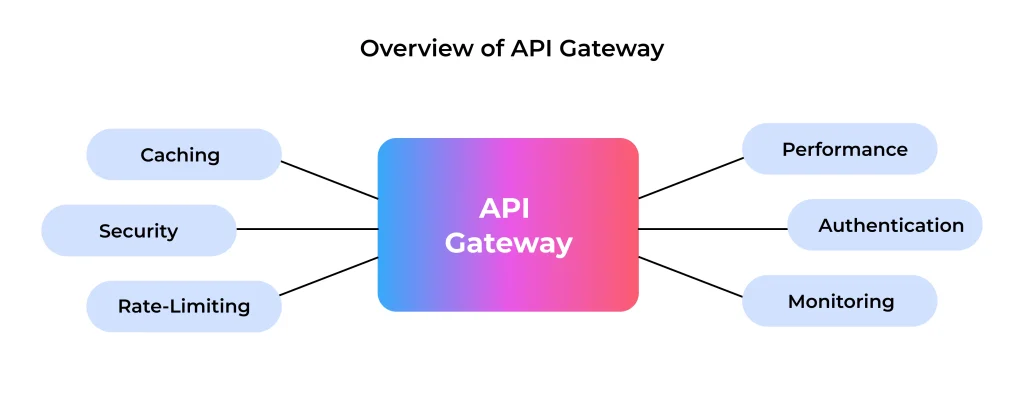
If you have ever used a universal remote to control multiple devices, you already understand the essence of an AI gateway. Instead of juggling different tools, protocols, and interfaces, it gives you one simple way to connect with all.
So, what is an AI gateway?
It is a middleware layer that acts as the central hub between enterprise apps and AI models. As mentioned before, think of it as a ” translator” to ensure that apps, data, and AI services speak the same language.
Key roles of an AI gateway:
- Unified Access – It offers a single entry point to connect with numerous AI models and providers.
- Governance & Security – Enforces policies around data handling and compliance.
- Optimization – The routes are requested intelligently for better performance and cost control.
- Observability – Tracks model usage, accuracy, and drift in real-time.
In short, an AI gateway simplifies complexity, helping enterprises to work with AI’s full potential without drowning in technical chaos.
Why Enterprises Need an AI Gateway Today
The rapid rise of AI across industries has created both opportunities and challenges. Enterprises are not just experimenting with models anymore; they are running mission-critical processes on them. This is where an AI gateway plays an important role, providing smooth adoption and long-term success.
Purpose of an AI Gateway
- Simplify Access – The AI gateway provides a unified entry point for all AI models and APIs.
- Ensure Governance – Ensures enterprise-wide policies on security, compliance, and data privacy.
- Optimize Operations – It balances workloads, cuts down on compute costs, and reduces redundancy.
- Enable Flexibility – AI gateways allow businesses to switch between vendors or integrate with multiple gen AI services easily.
Why Enterprises Should Adopt It
- Scalability at Ease – The scale of AI solutions across departments without integration hurdles.
- Future-Proofing Investments – It avoids vendor lock-in and remains adaptable as AI technologies evolve.
- Accelerated Innovation – AI gateway experiment faster with new models, while also maintaining control.
- Business Agility – Move from pilot projects to enterprise-wide AI adoption confidently.
In short, adopting an AI gateway helps enterprises turn scattered AI efforts into a structured, governed, and scalable ecosystem ready for growth.
AI Gateways vs Traditional API Gateways
At first glance, many assume that AI gateways may look similar to traditional API gateways since both act as middle layers connecting applications with services. But their focus and capabilities differ significantly.
While API gateways are designed for microservices, AI gateways are built to handle the unique demands of AI and machine learning.
| Aspect | API Gateway | AI Gateway |
| Primary Role | Routes service requests | Manages AI models and pipelines |
| Data Handling | Structured data only | Structured + unstructured data |
| Optimization | Load balancing | Intelligent routing & cost control |
| Monitoring | API usage metrics | Model accuracy, drift, cost |
| Flexibility | Connects microservices | Integrates diverse AI tools & vendors |
In short, API gateways solve connectivity and provide intelligence, governance, and scalability to modern enterprises.
Key Benefits of an AI Gateway
Adopting AI is not all fun and excitement; it is tough without the right structure, and it can feel like trying to juggle too many balls at once.
That’s where an AI gateway comes in. It not only simplifies things but also makes AI adoption smarter, safer, and faster.
Now let’s look at the key benefits it brings:
- Centralized AI Management
The AI gateways give a single control hub for everything with AI, which removes the need to deal with scattered models and APIs.
- Improved Security & Compliance
Data is a goldmine in AI, and keeping it safe is non-negotiable. And AI gateways enforce policies to protect sensitive information and meet regulatory standards.
- Cost Optimization
Why do companies overspend on computing power? Intelligent routing ensures requests go to the most efficient models, saving both money and time.
- Vendor Neutrality
AI gateways help you easily mix and match AI tools from different vendors and avoid getting stuck with one provider.
- Scalability & Performance
As your AI needs grow, so does the gateway’s ability to balance loads and keep systems running smoothly.
- Enhanced Monitoring & Analytics
Get real-time insights on model accuracy, drift, and cost, so you always know what’s working and what needs tweaking.
- Faster AI Adoption
Instead of wrestling with integration headaches, teams can focus on innovation and put AI into action quickly.
In short, AI gateways are like the ultimate organizers, keeping AI adoption structured, cost-effective, and ready to scale.
Think of an AI gateway as your enterprise’s backstage manager, quietly handling the chaos so your AI performance always shines in the spotlight.
Challenges in Implementing an AI Gateway
Adopting an AI gateway sounds amazing in theory, but like any other powerful tool, it comes with its own set of hurdles. So it is important to understand these challenges early to save time, money, and headaches.
- Integration Complexity
Connecting multiple AI models, APIs, and legacy systems is not always straightforward and easy. Different data formats, protocols, and vendor requirements make integration feel like solving a puzzle.
- Performance Bottlenecks
If not properly configured, the gateway itself can slow down requests, cause delays in AI responses, and affect overall system efficiency.
- Skill Gaps
Managing an AI gateway needs proper expertise in AI operations, monitoring, and governance; it is a skill that might be limited in many organizations.
- Evolving Standards
AI governance, interoperability, and compliance rules are still developing. Enterprises must stay agile in adopting standards that are likely to change over time.
While these challenges are real, careful planning, skilled teams, and best practices can help enterprises navigate them successfully and reap the full benefits of AI gateways.
Best Practices for AI Gateway Implementation
Knowing what is an AI gateway is not enough; it is only a first step, the actual success lies in how you implement it. As AI gateways simplify adoption, following best practices is essential to ensure they deliver maximum value.
Start Small, Scale Gradually
Start with one or two critical AI models before expanding enterprise-wide. This greatly minimizes risk and helps the team learn as they go.
Ensure Vendor-Agnostic Design
Choose a gateway that supports multiple providers. For example, being able to switch between OpenAI and Anthropic prevents vendor lock-in.
Prioritize Security & Compliance
AI gateways protect sensitive data with encryption, access controls, and policy enforcement. It is mainly vital for industries like finance or healthcare.
Enable Monitoring & Observability
Set up real-time dashboards to track the models’ accuracy, drift, and costs. This helps detect issues before they impact the business.
Automate Lifecycle Management
It is better to use automation for model updates, scaling, and version control to reduce manual errors.
Focus on User Experience
Make integration simple for developers and intuitive for end-users so adoption feels seamless and not burdensome.
Following these best practices ensures AI gateways become enablers of growth, not roadblocks.
Additional Read: Exploring AI in Daily Life: Smarter Choices, Easier Living
AI Gateways: The Bridge to Smarter Enterprise Adoption
AI gateways are more than just a technical layer in the digital space; they work as translators, organizers, and guardians of enterprise AI adoption. From simplifying integration to ensuring security, cutting costs, and embedding scalability, they are the missing piece that transforms scattered AI efforts into an organized, future-ready system.
At Openxcell, we specialize in building intelligent and secure AI solutions customized for enterprises. With our expertise in AI services, we help companies implement gateways, integrate models, and unlock the real potential of artificial intelligence without any chaos.

FAQs on AI Gateway
1. What is the role of an AI Gateway in enterprises?
An AI gateway acts as the central hub for managing, securing, optimizing, and giving access to multiple AI models, making enterprise AI adoption easier and more scalable.
2. How is an AI Gateway different from an API Gateway?
While API gateways route service requests, AI gateways are built for AI-specific needs like model selection, data governance, cost optimization, and accuracy monitoring.
3. What are the main benefits of using an AI Gateway?
The key benefits of an AI gateway include centralized AI management, improved compliance, cost control, vendor flexibility, scalability, and faster AI adoption across enterprise systems.
4. What challenges do enterprises face when adopting AI Gateways?
Challenges mainly include integration complexity, potential performance bottlenecks, skill gaps in AI governance, and keeping up with evolving AI standards.
5. What are the best practices for implementing AI Gateways?
It is best to start small, design vendor-agnostic systems, prioritize compliance, help with observability, automate lifecycle management, and focus on a smooth user experience.

Manushi, a former literature student, now crafts content as a writer. Her style merges simple yet profound ideas. Intrigued by literature and technology, she strives to produce content that captivates and stimulates.